
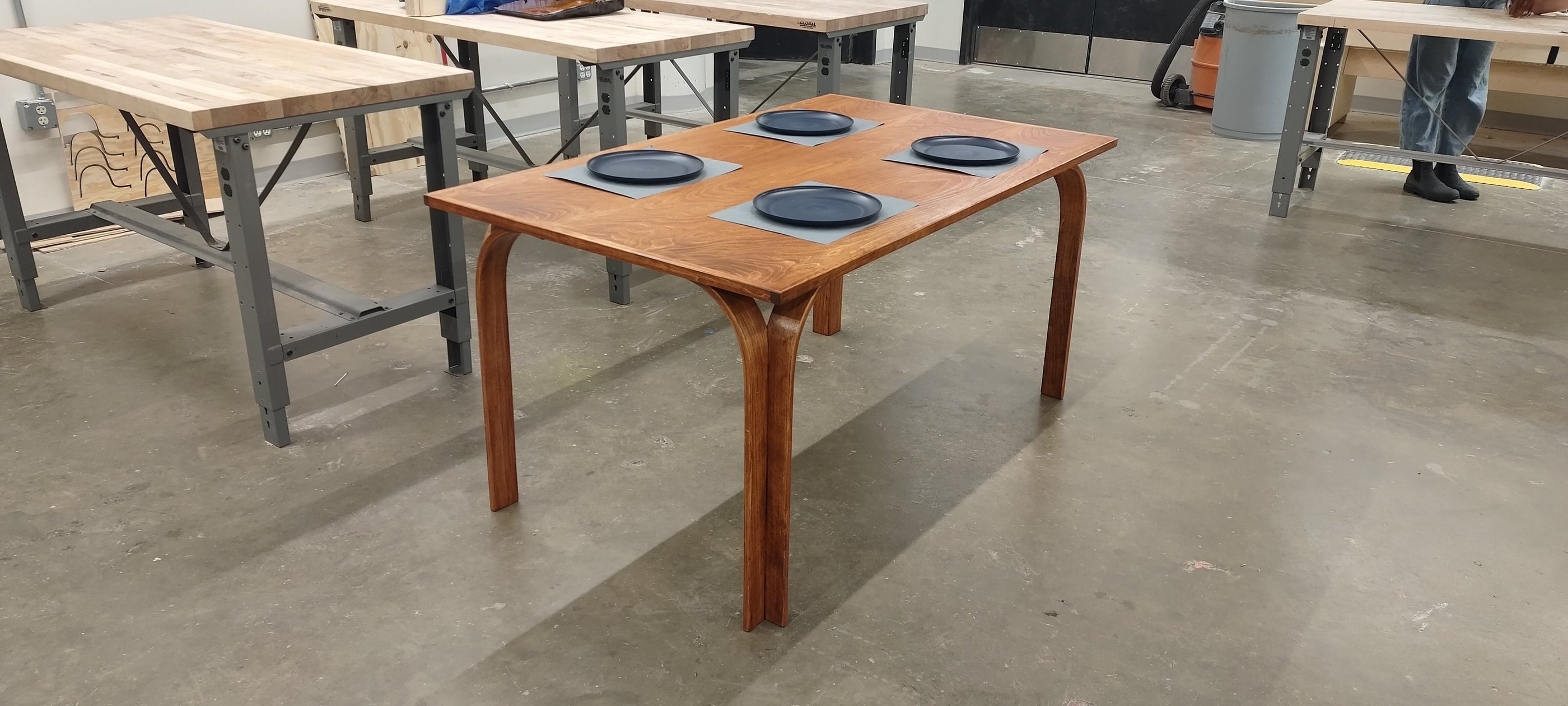
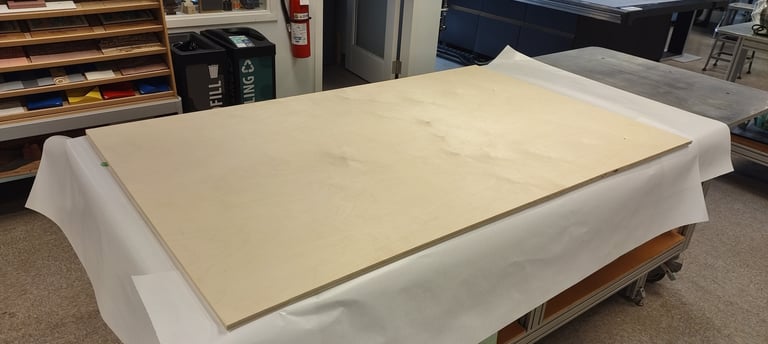
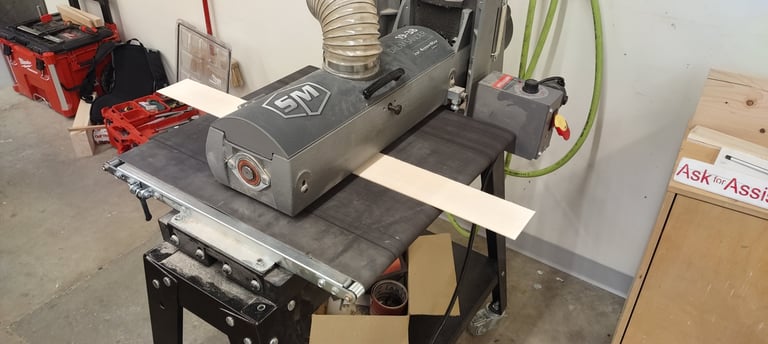
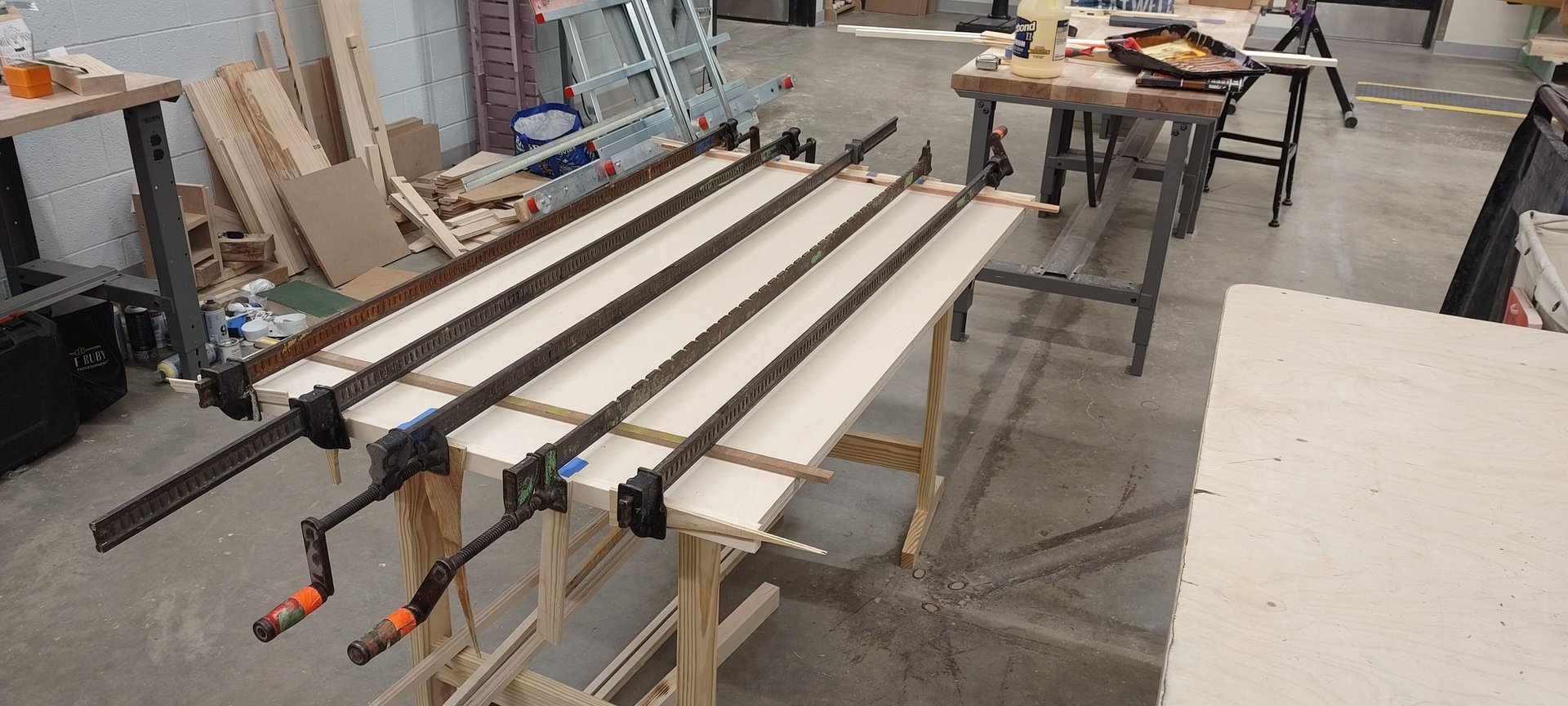
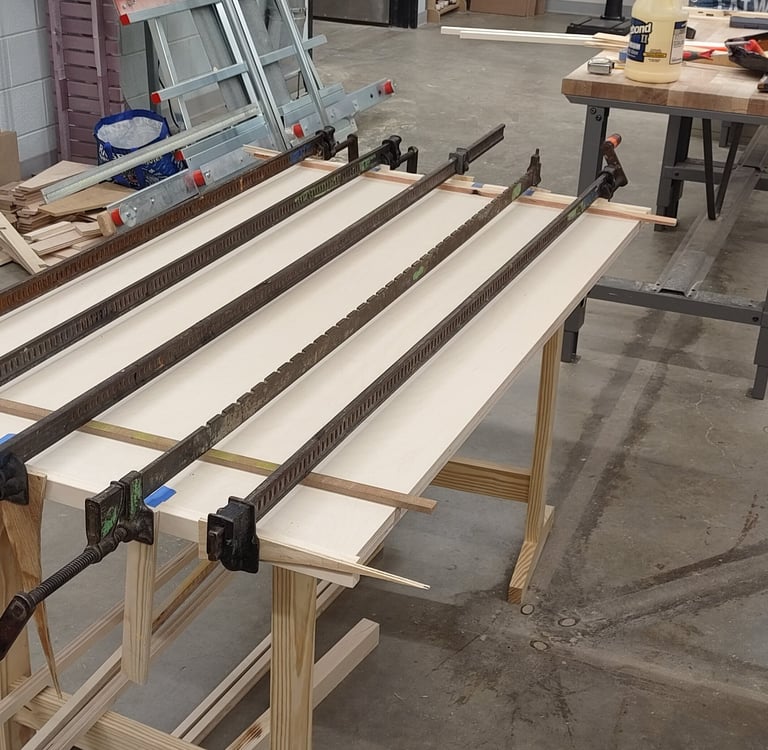
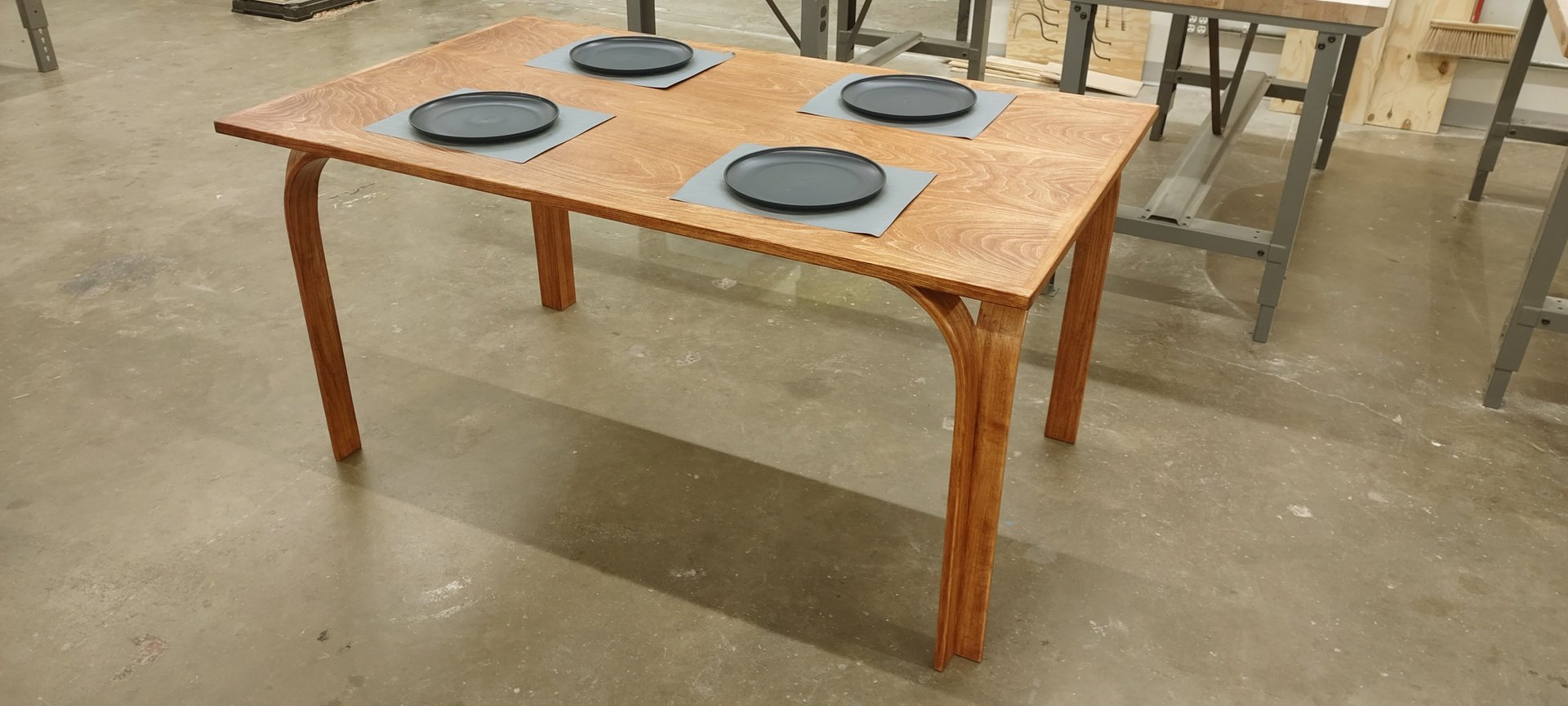
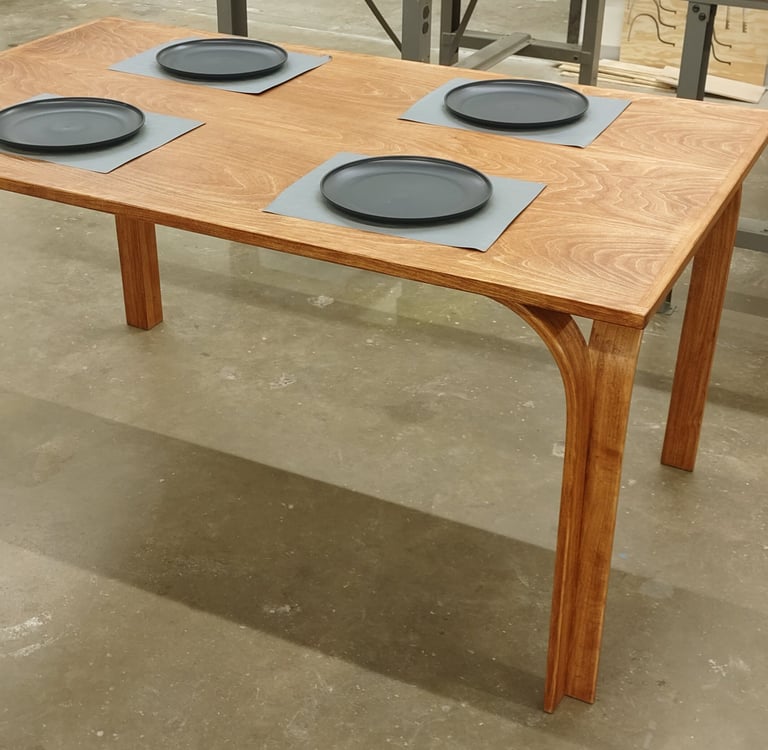
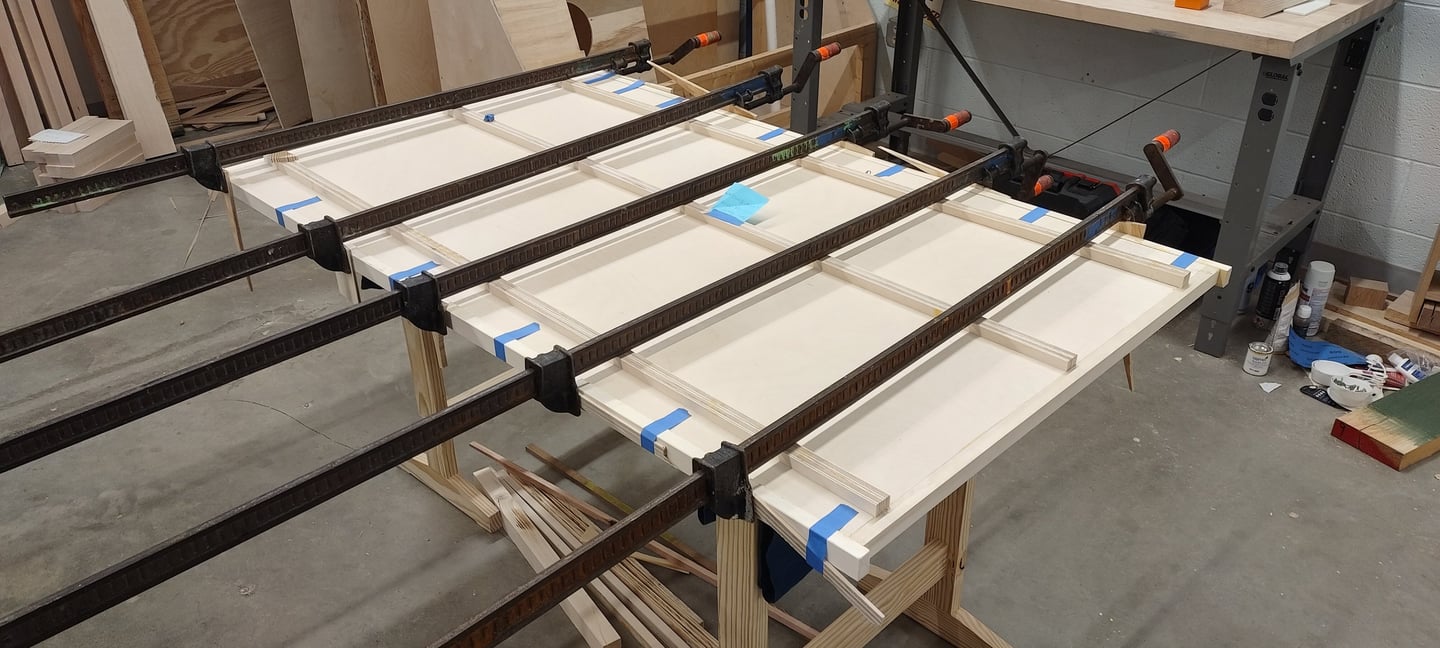
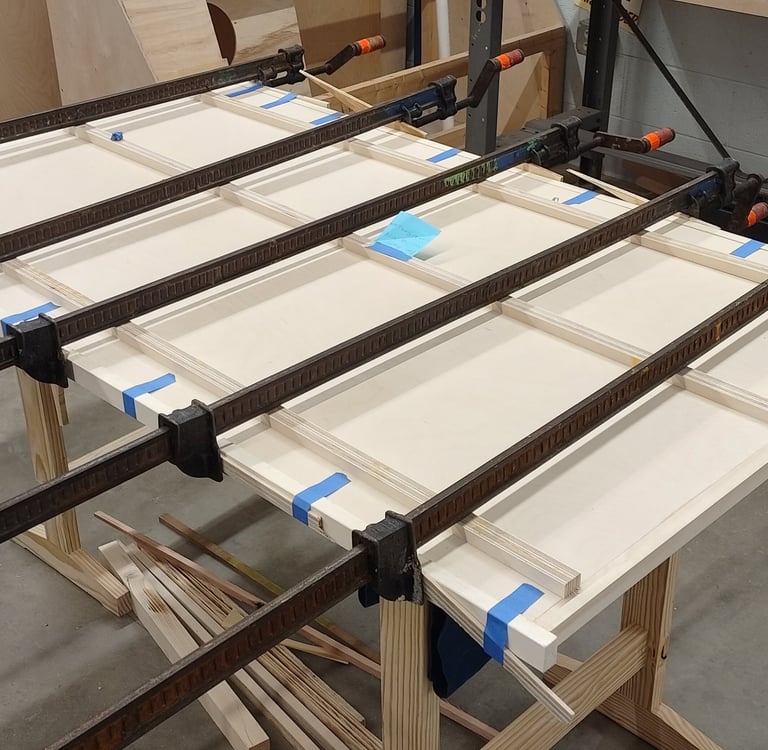
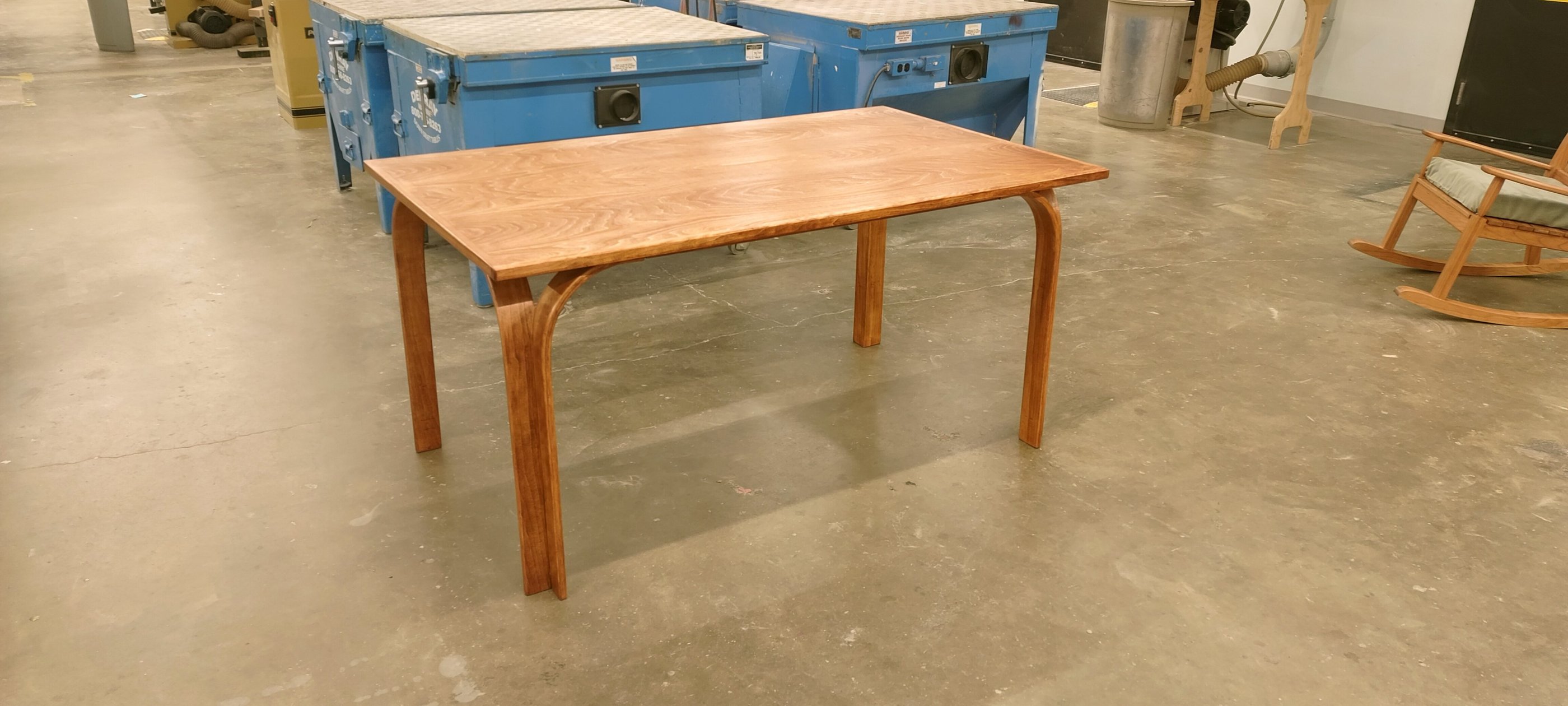
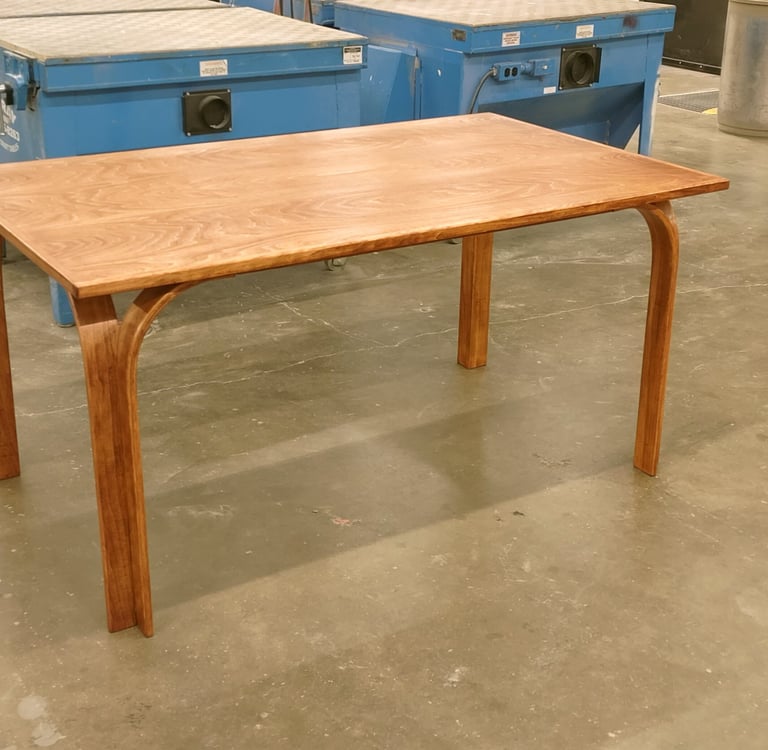
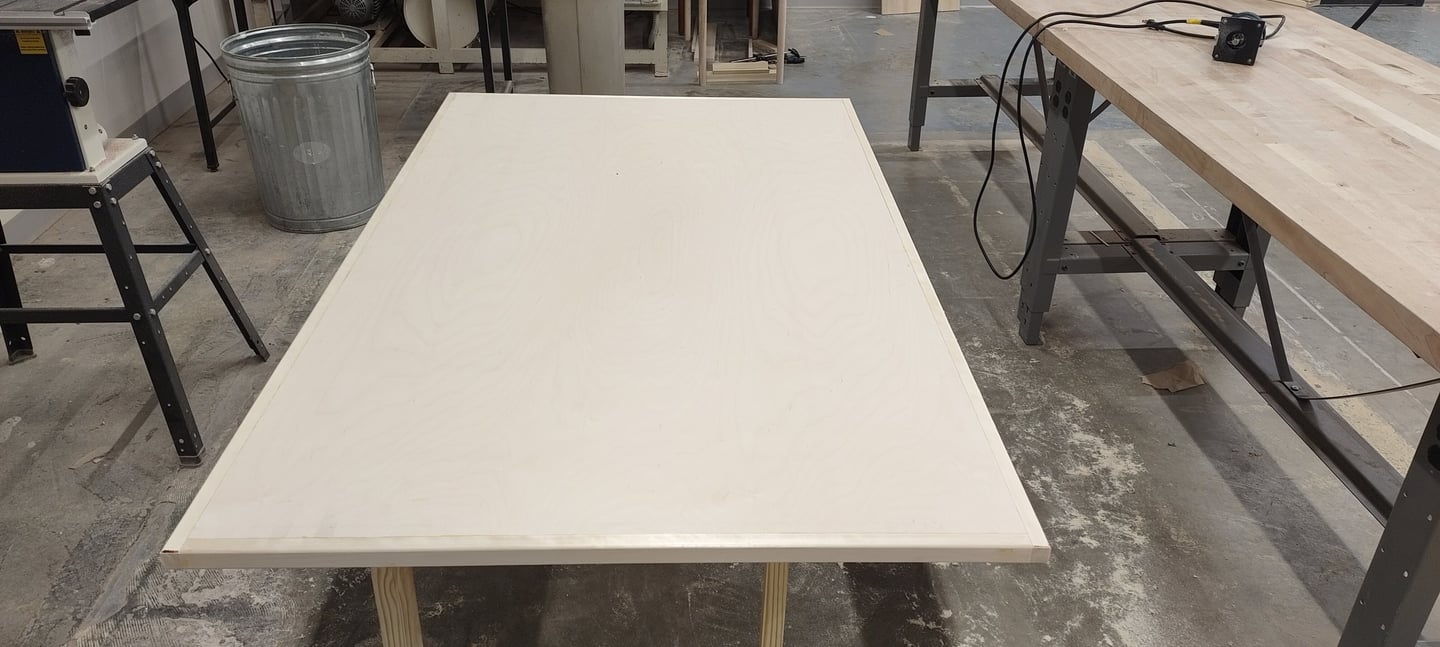
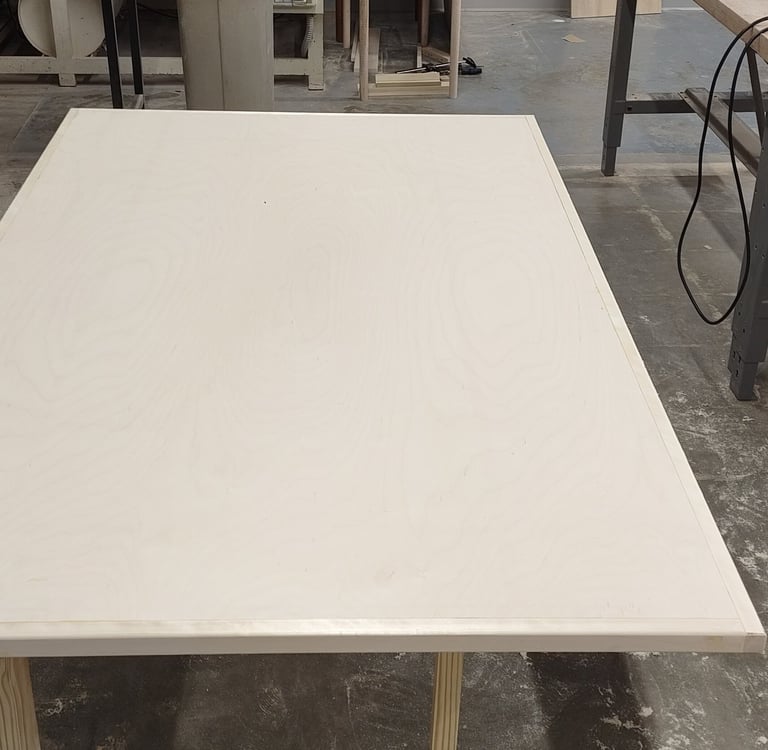
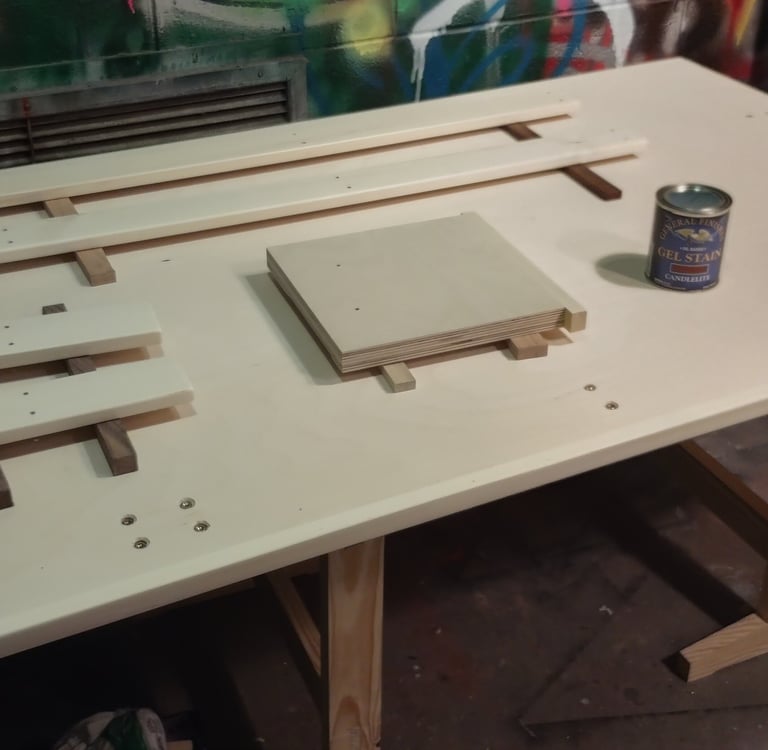
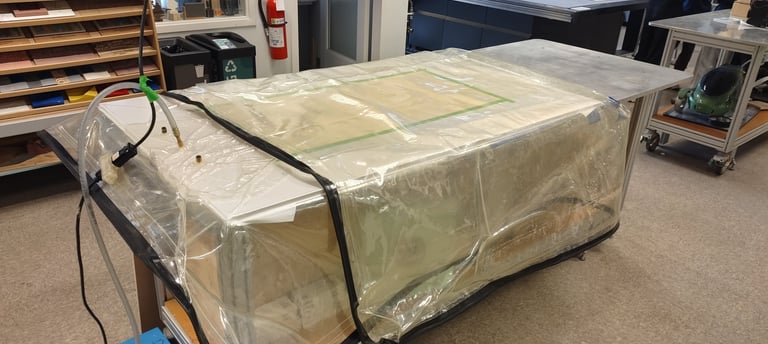
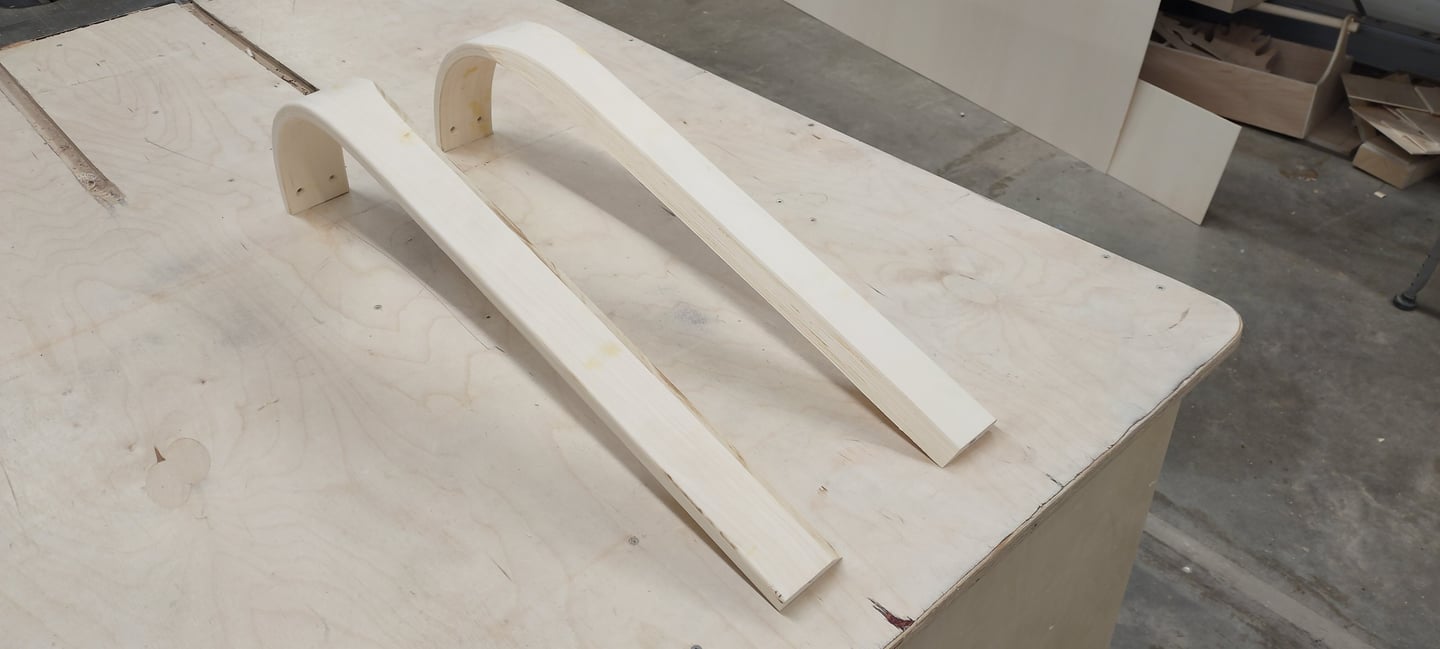
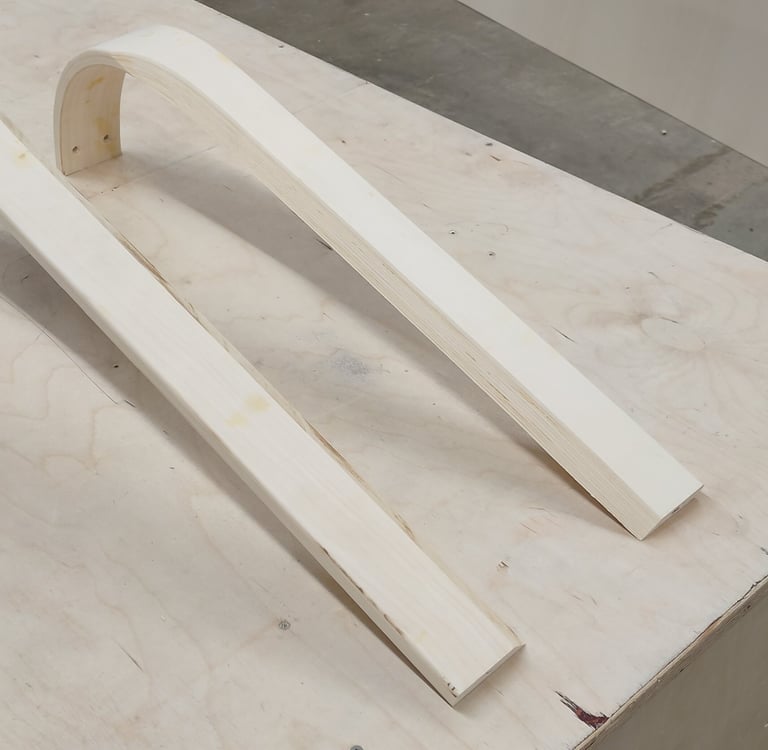
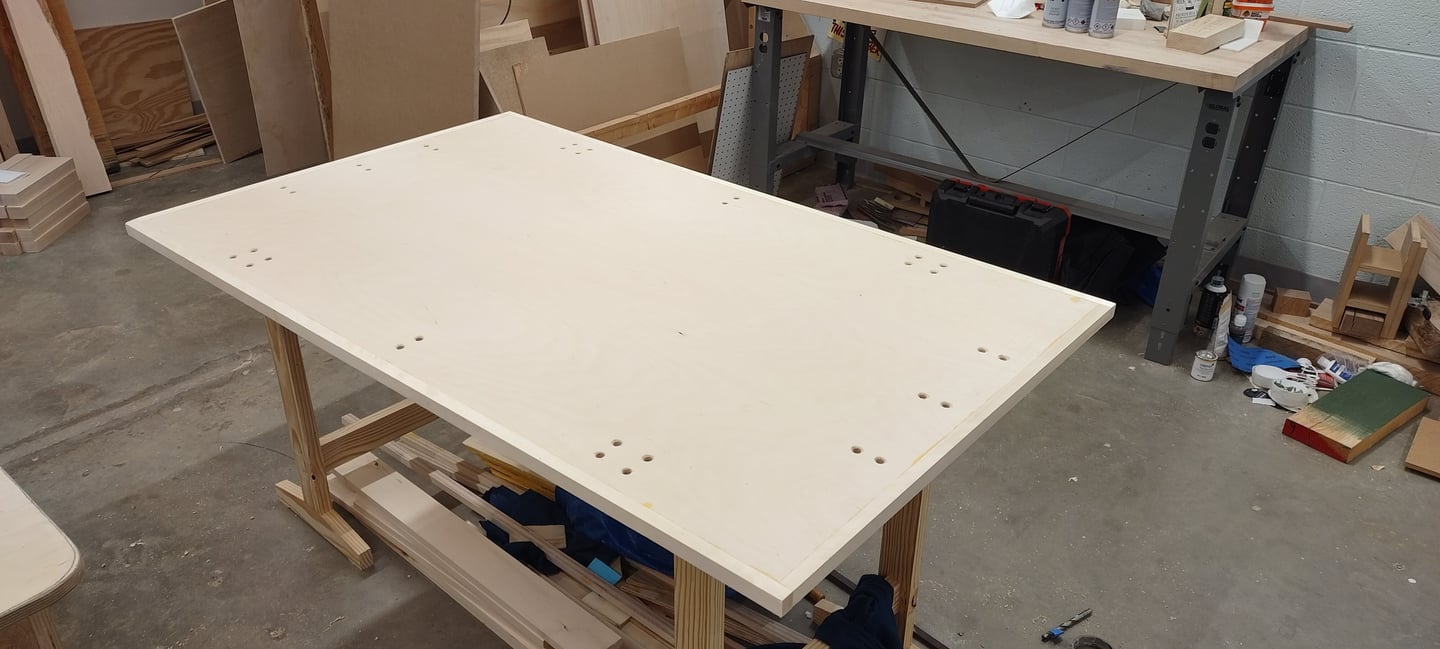
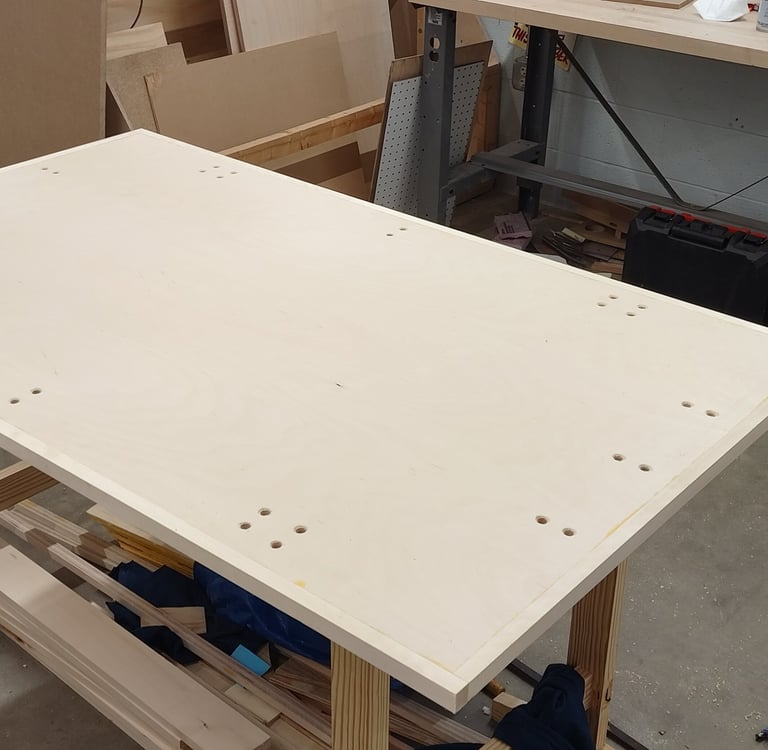
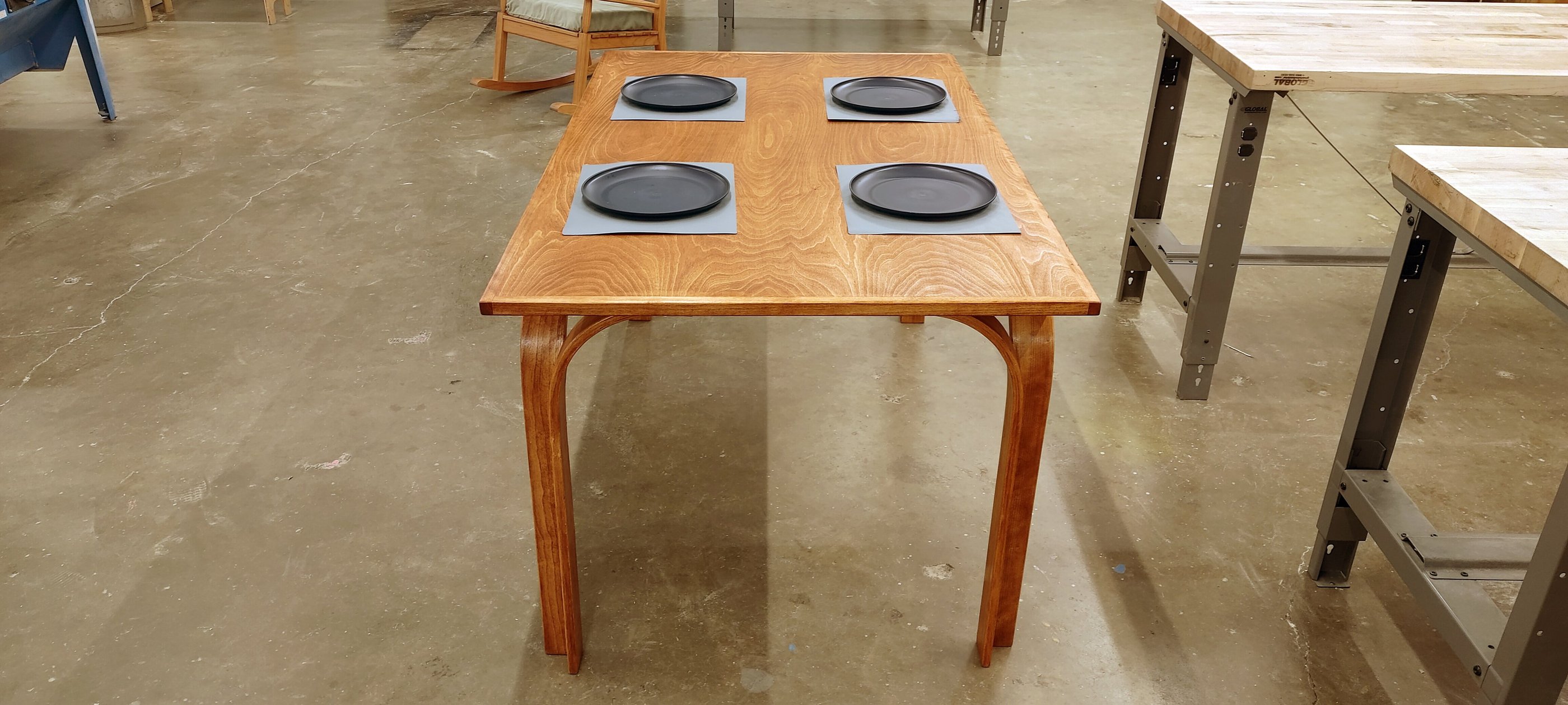
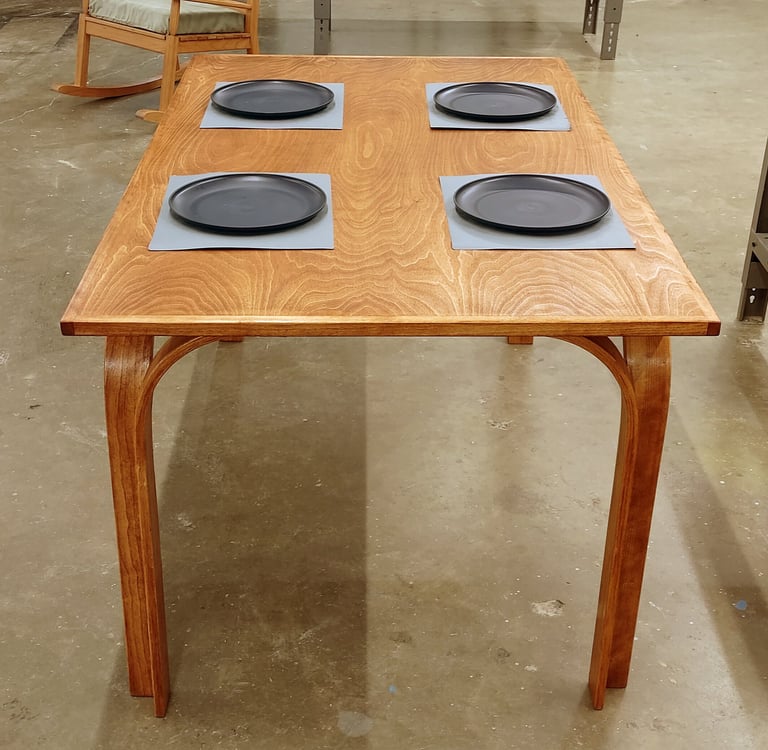
Now that I knew what design I wanted to venture into, I began working on each of the steps required for the design. First, after sawing the table top in half, I laminated the two pieces together using a vacuum press. I went for a 3 foot by 5 foot table so that I could seat 6 people comfortably when placed in a dining room setting. The second step was to split and sand each of the panels that would be used for the legs in preparation to make the bent lamination.
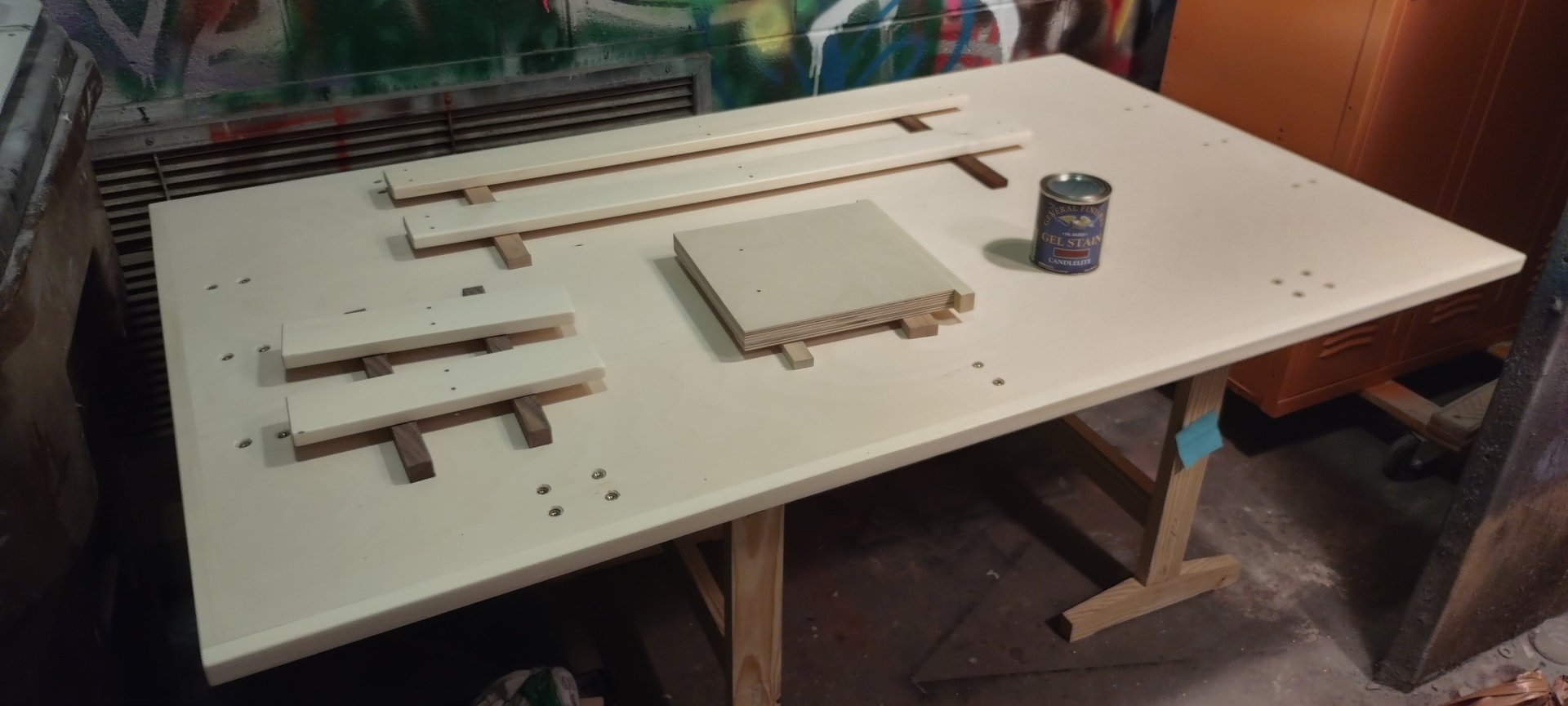
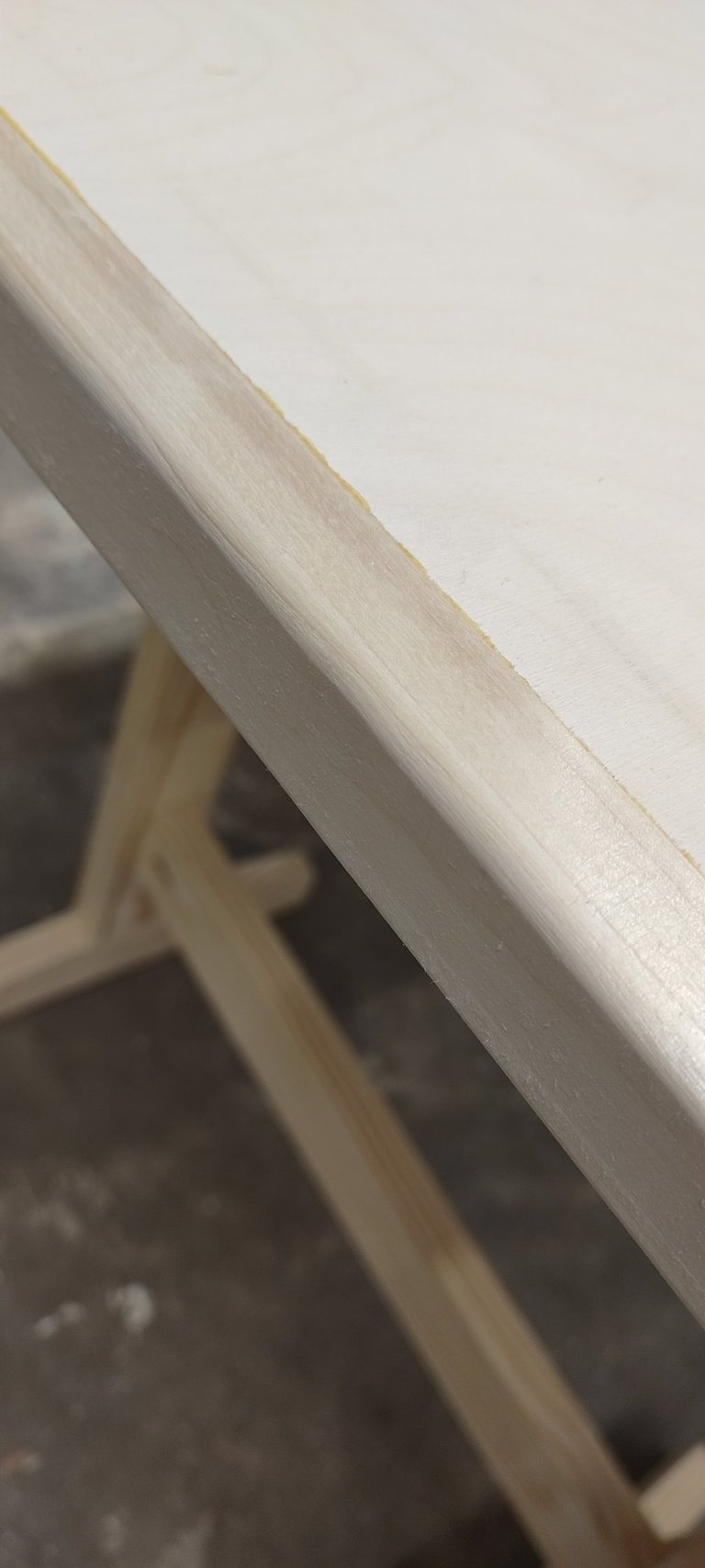
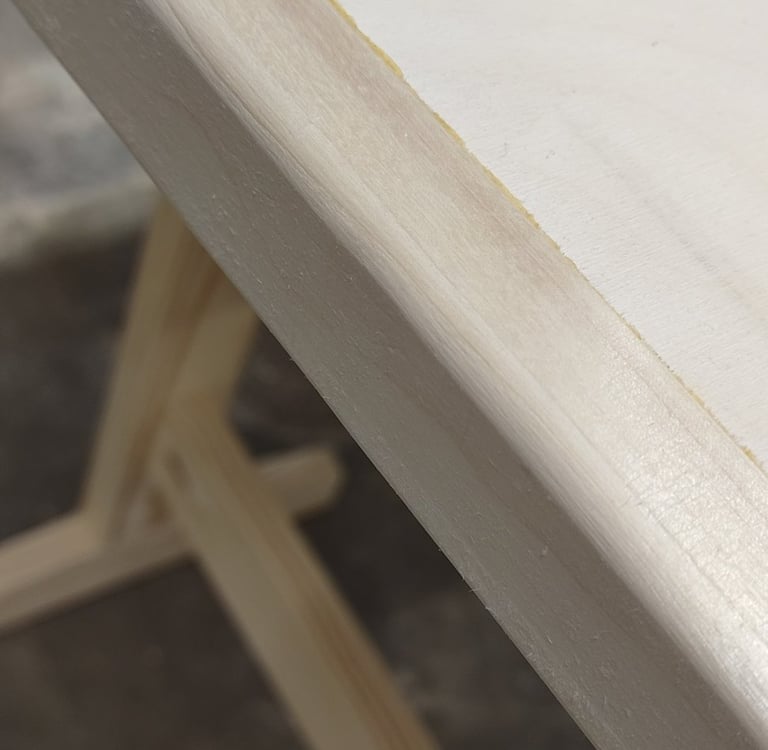
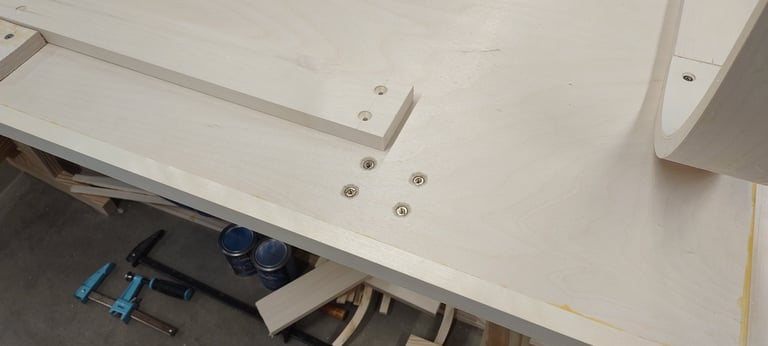
With the lags of the table done, it was time to move back to the table top surface. I began by glueing on solid wood edging around each side of the table top. Next, I moved onto adding the table skirt as well as the hardware needed for attaching each leg.


Sun Chair
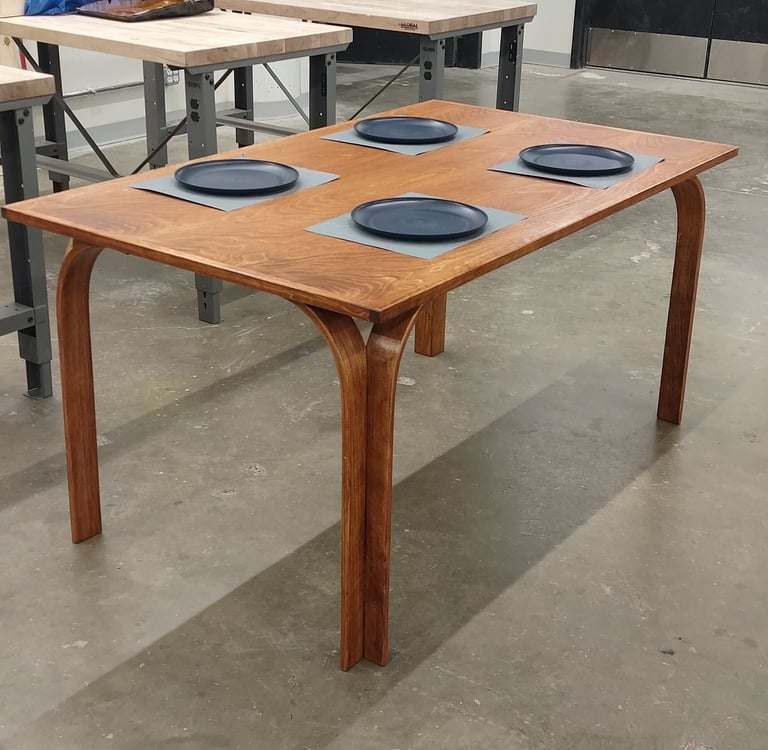
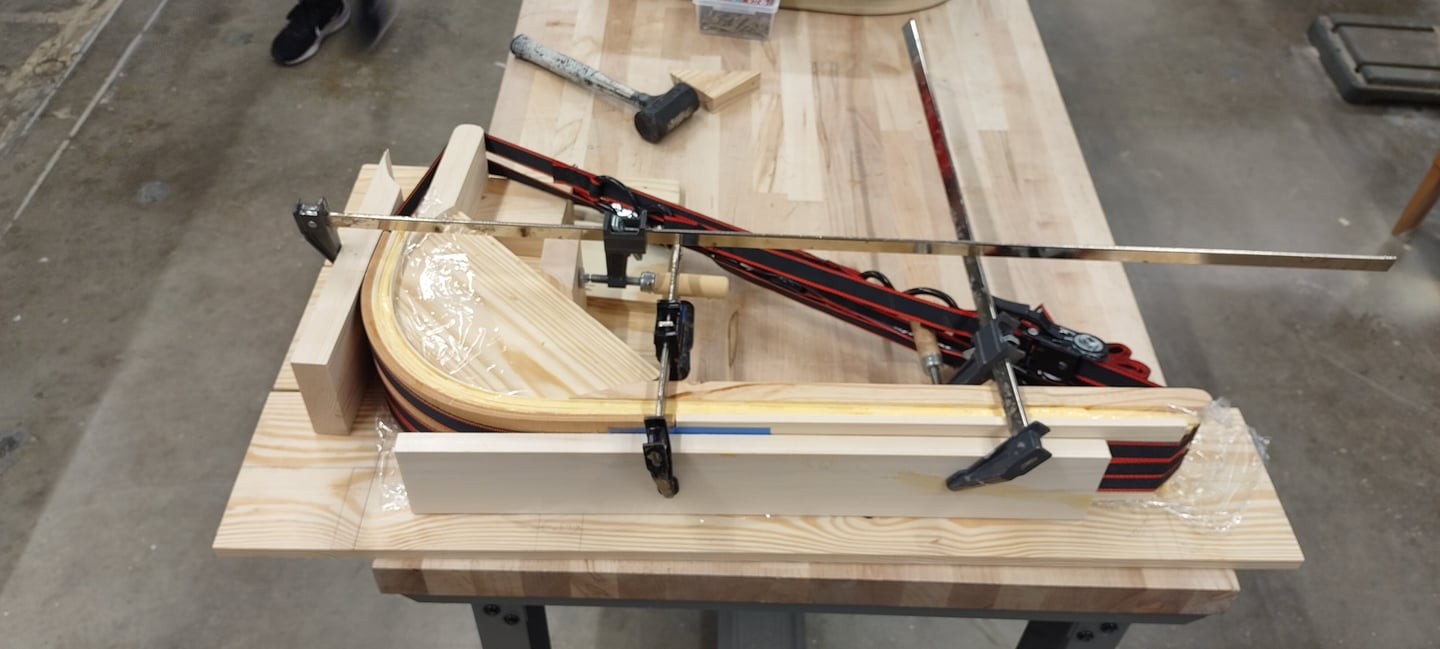
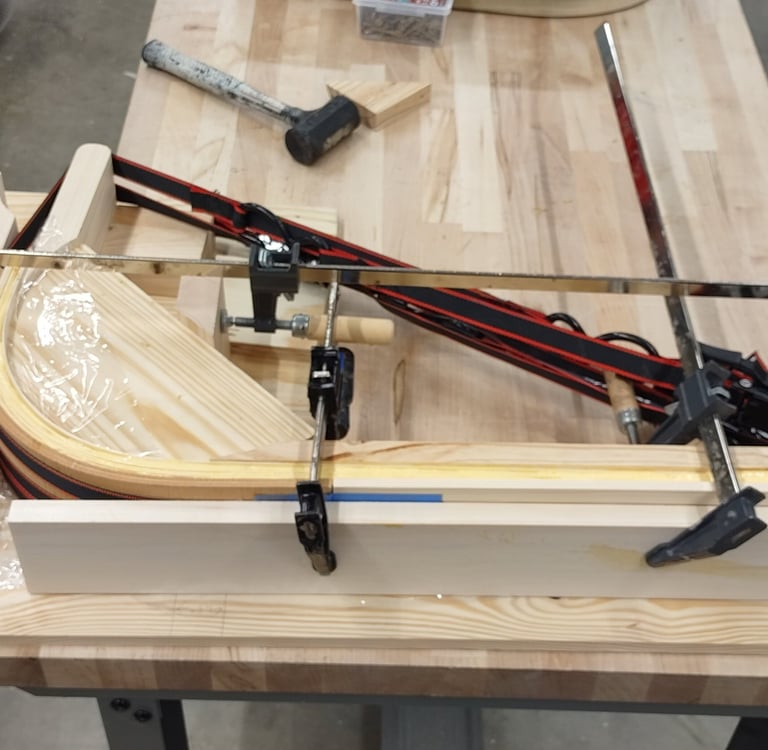
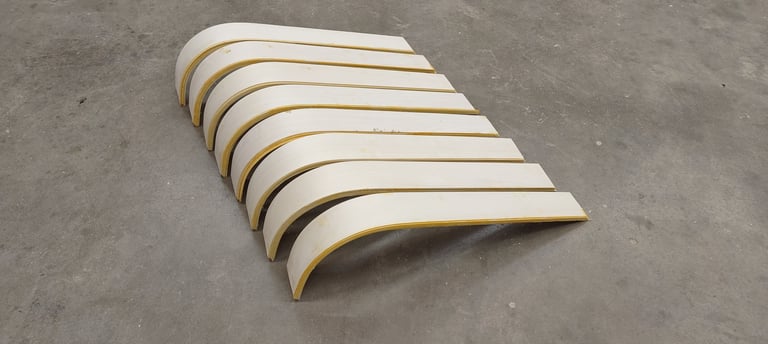
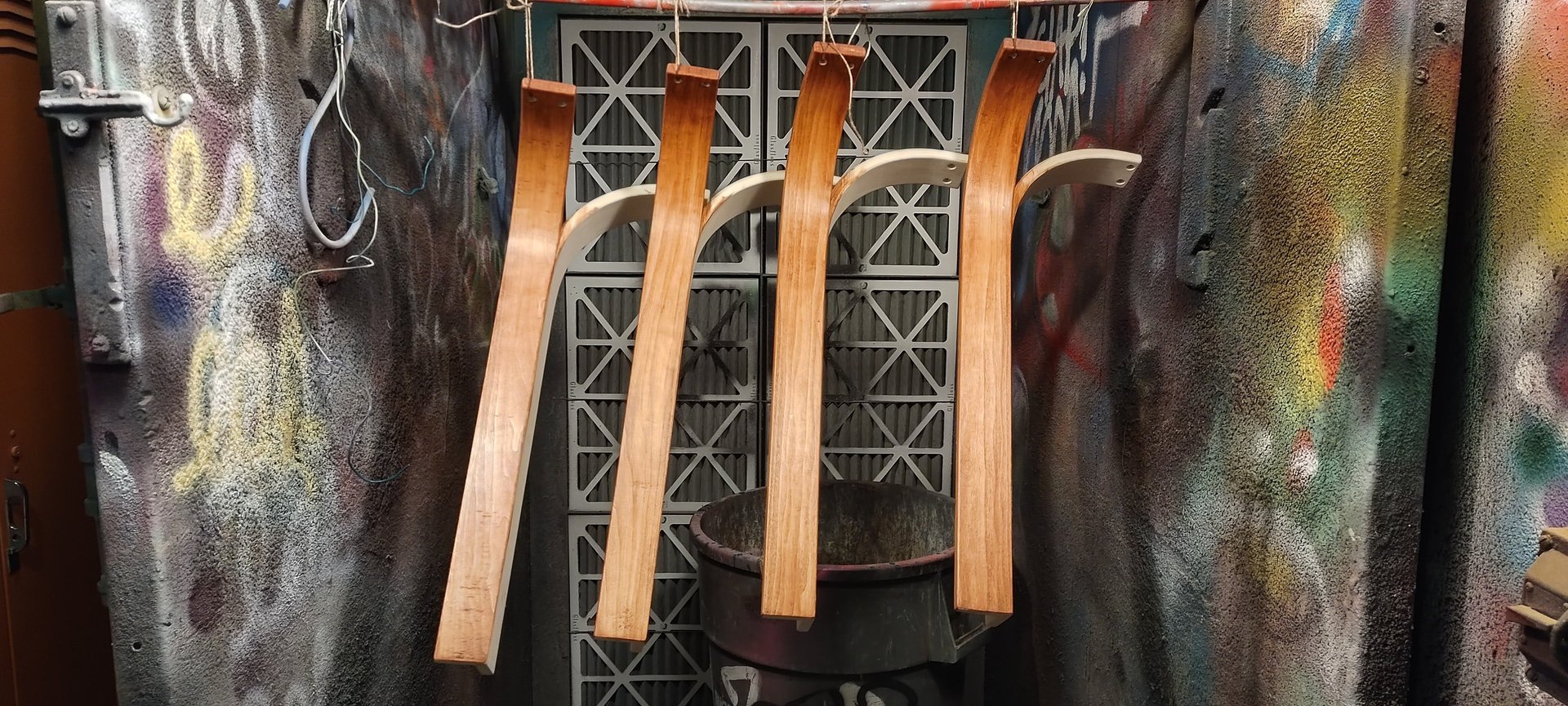
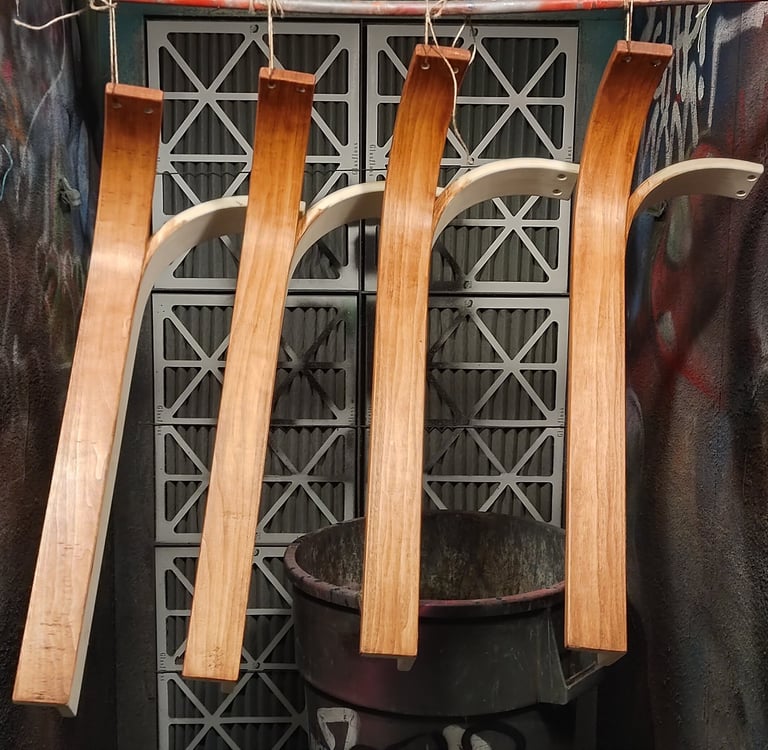
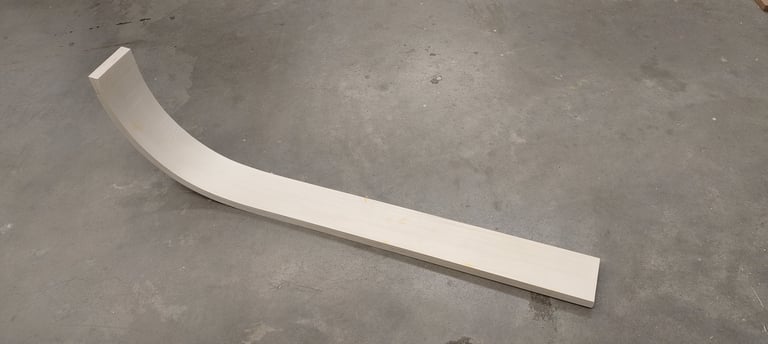
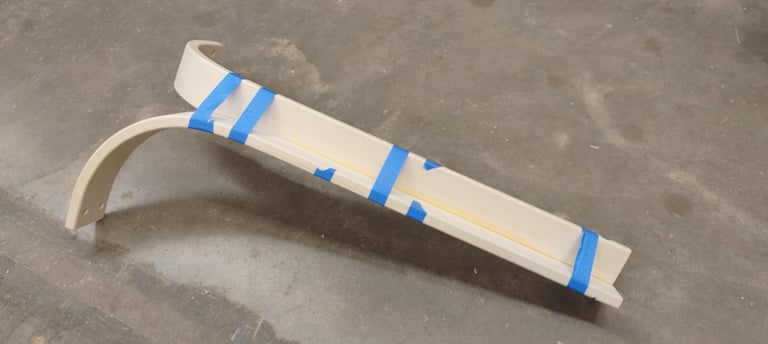
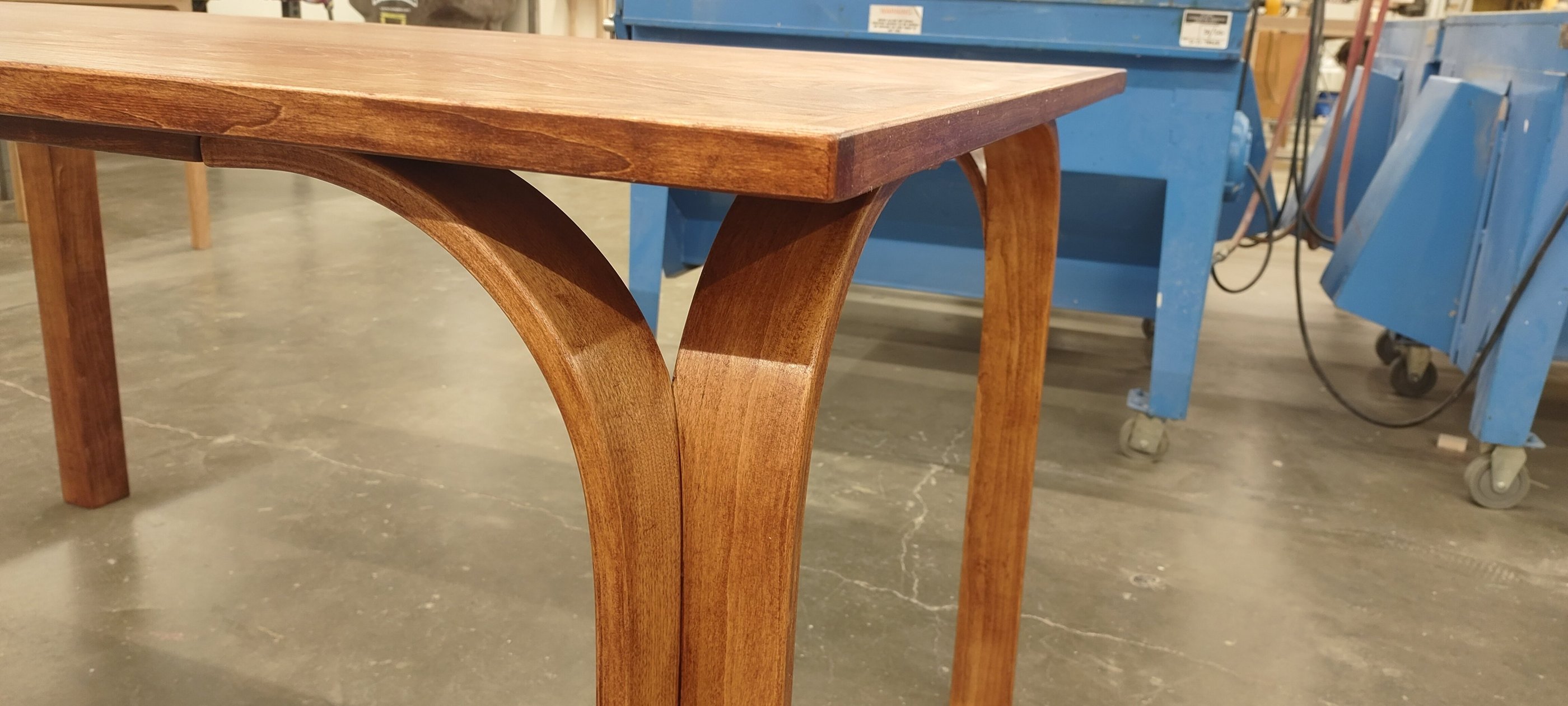
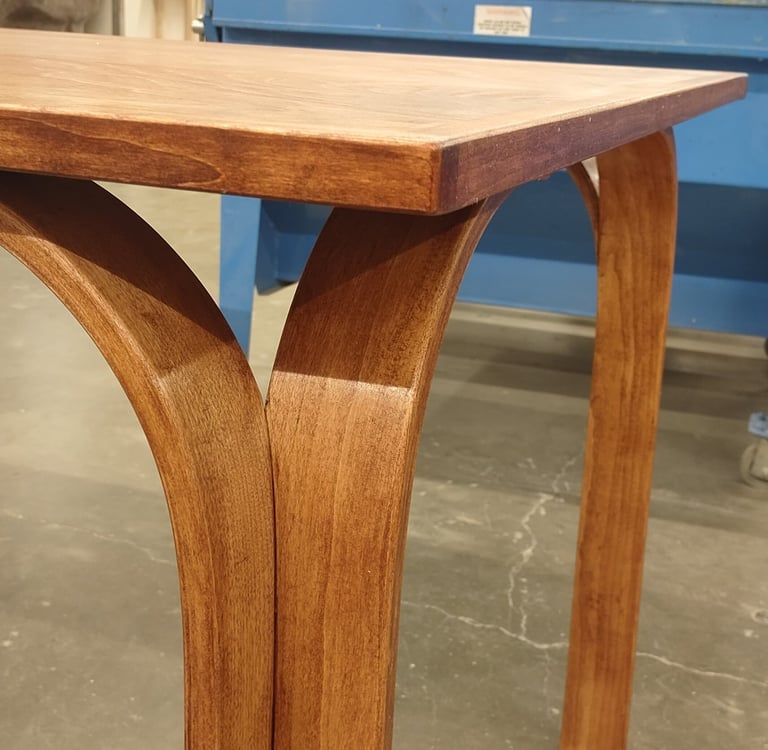
Using a jig made from scratch, I put a 90 degree bend into each of the bent lamination panels. They were then cut at a 45 degree angle using the table saw. All 8 bent lamination pieces were then glued together to form each of the 4 legs of the table.
Low Fidelity Ideation
Bent Lamination
Finishing The Table Top
Final Touches
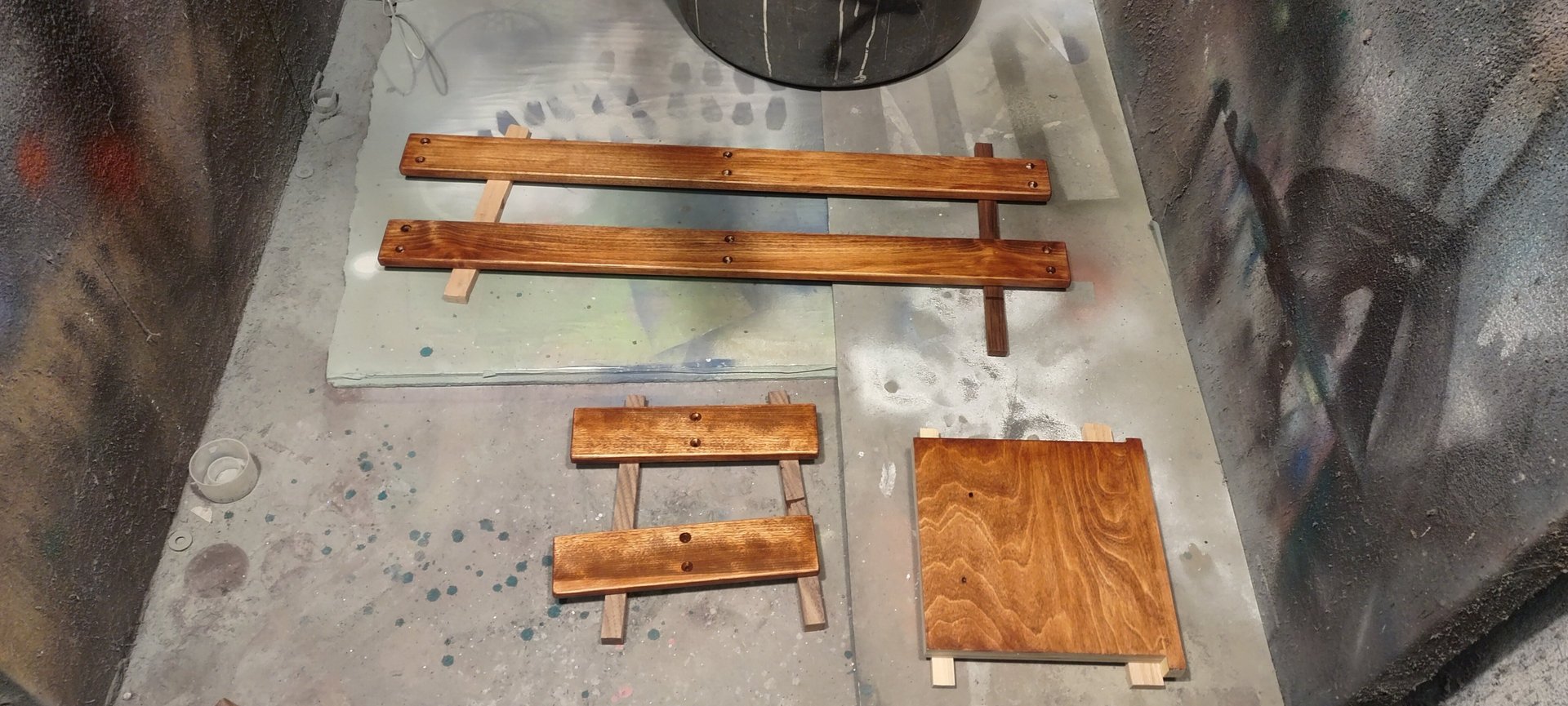
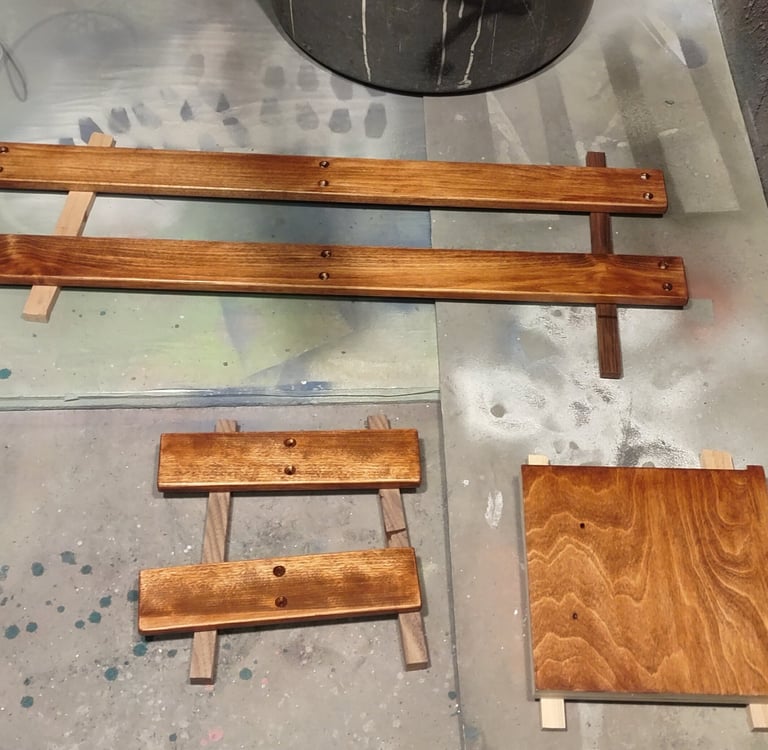
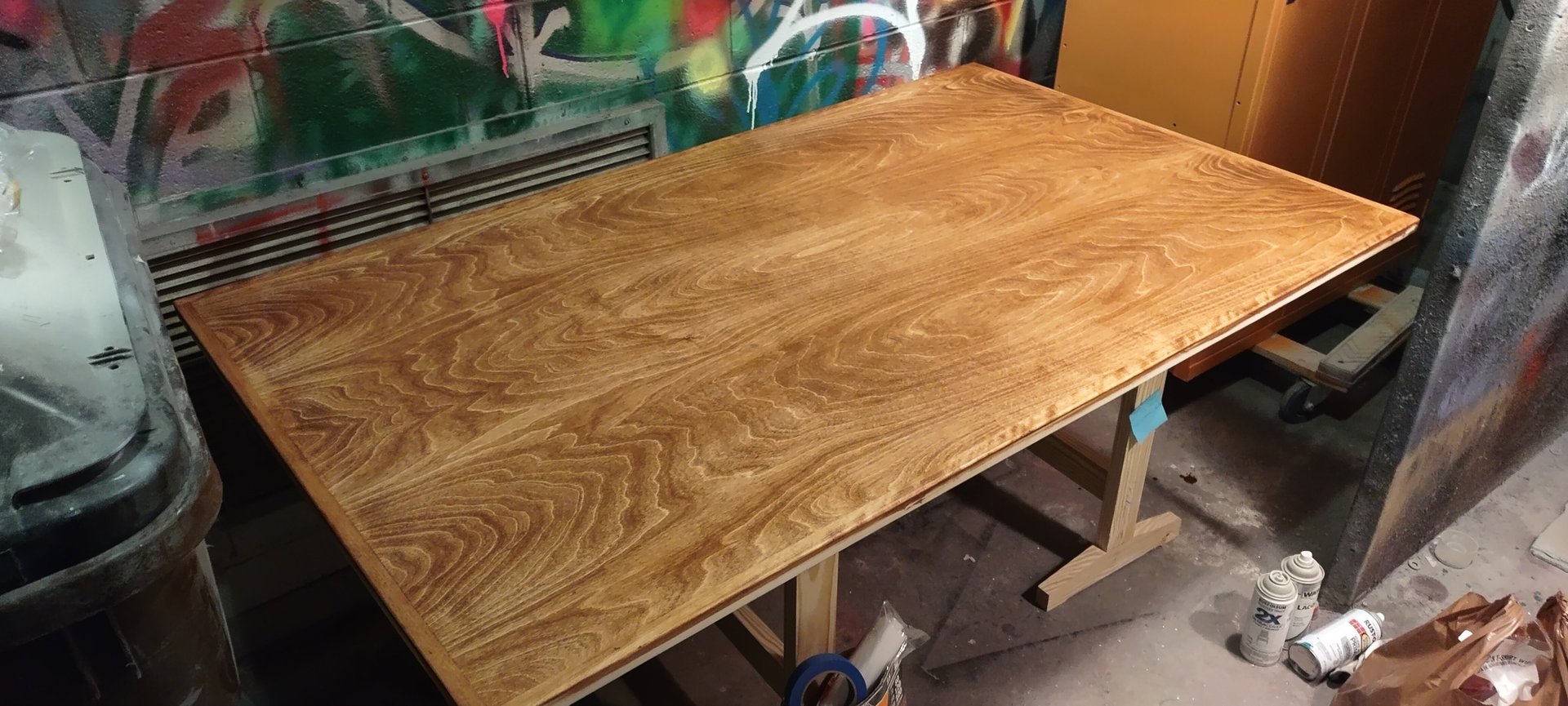
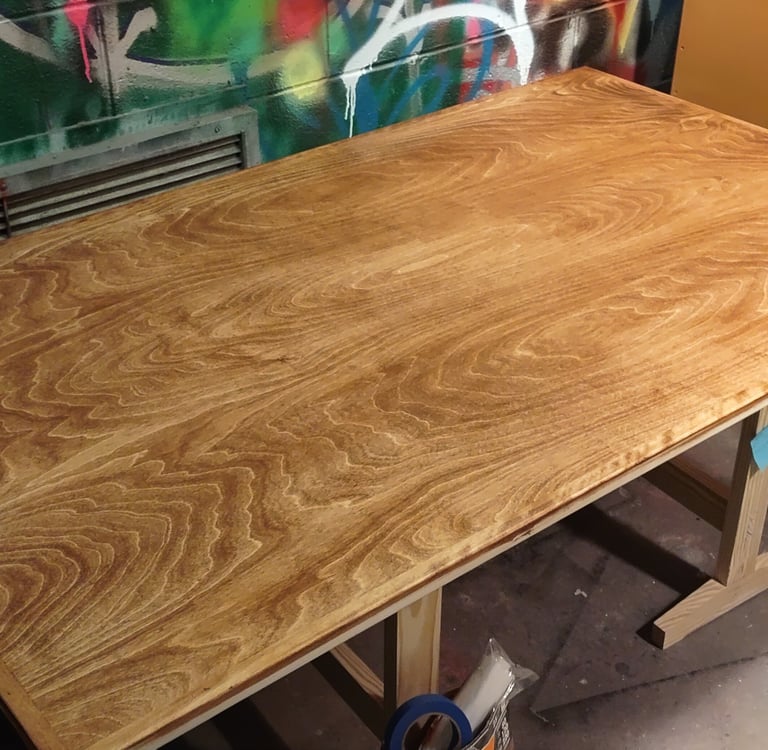
With all of the parts complete, I sanded down every surface to 600 grit in addition to adding a rounded bevel onto each edge. Finally, after using a test sample, I stained every piece to add a nice brown hue to the table, thus allowing the wood grain to appear.
Design Direction
Wood Funiture
U-Table
Complete Table Design
High Fidelity Ideation
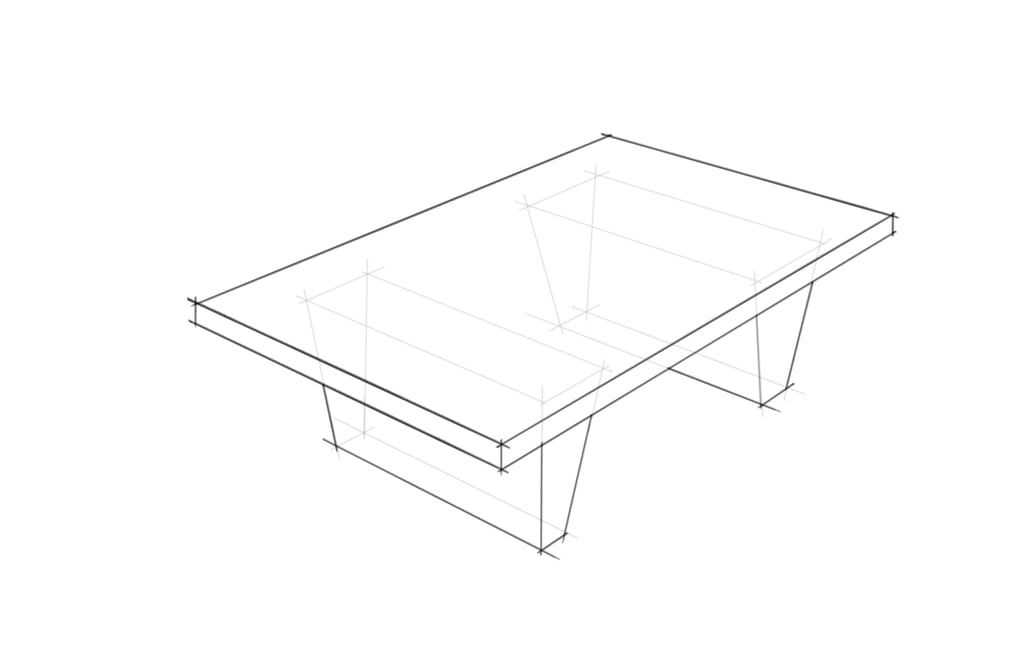
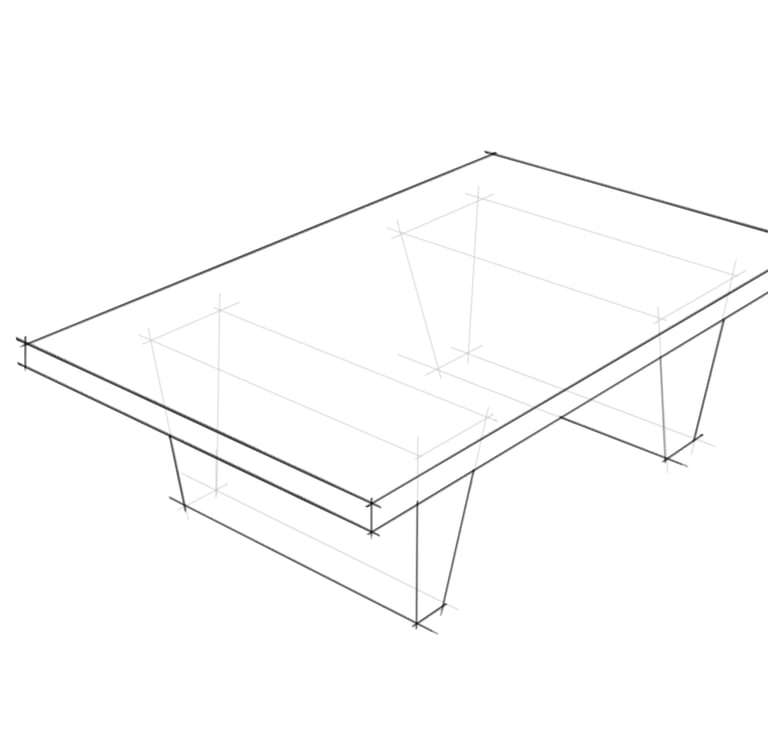
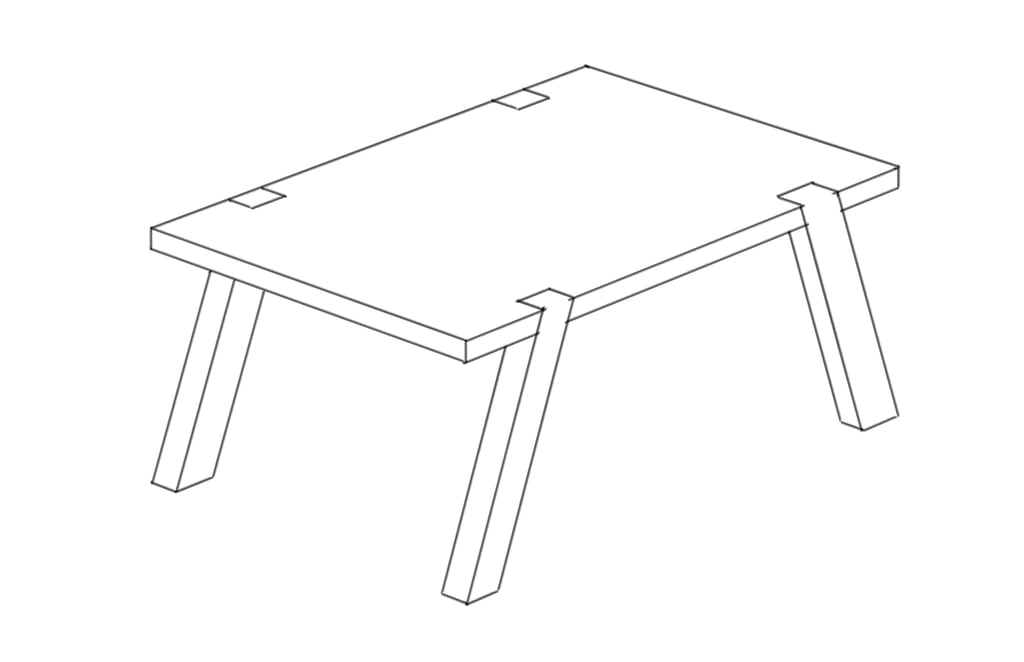
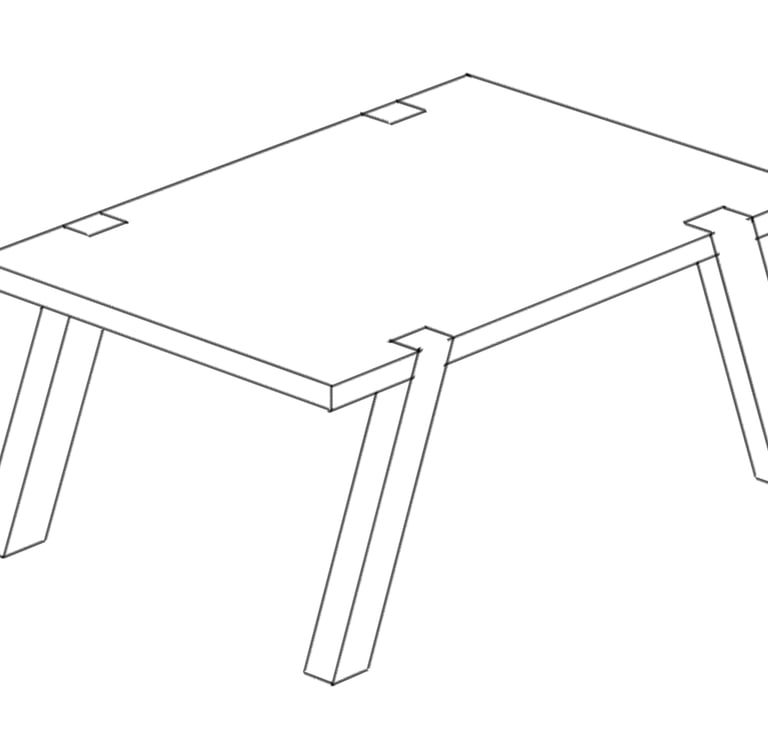
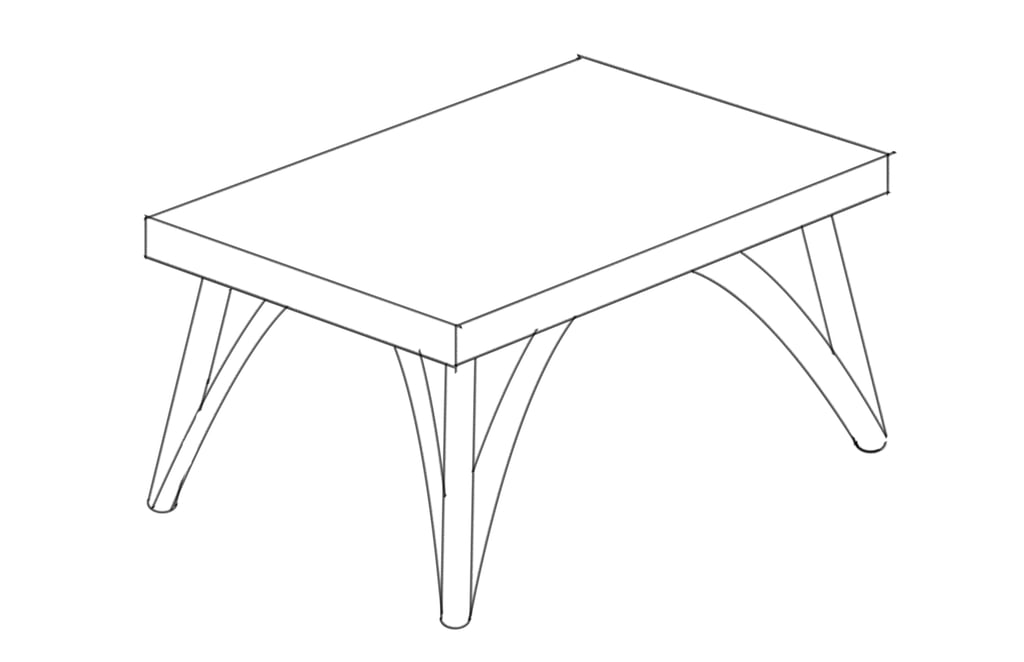
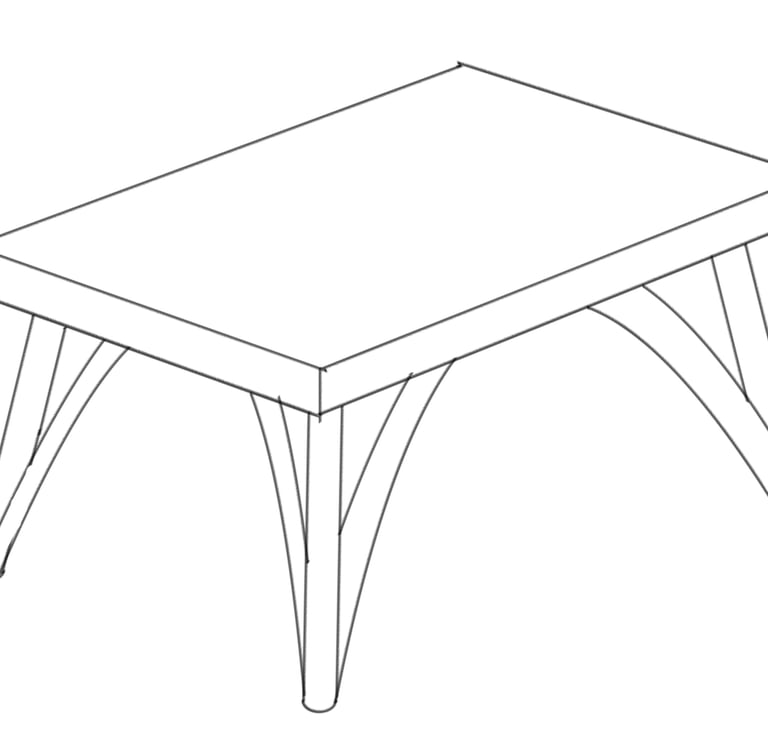
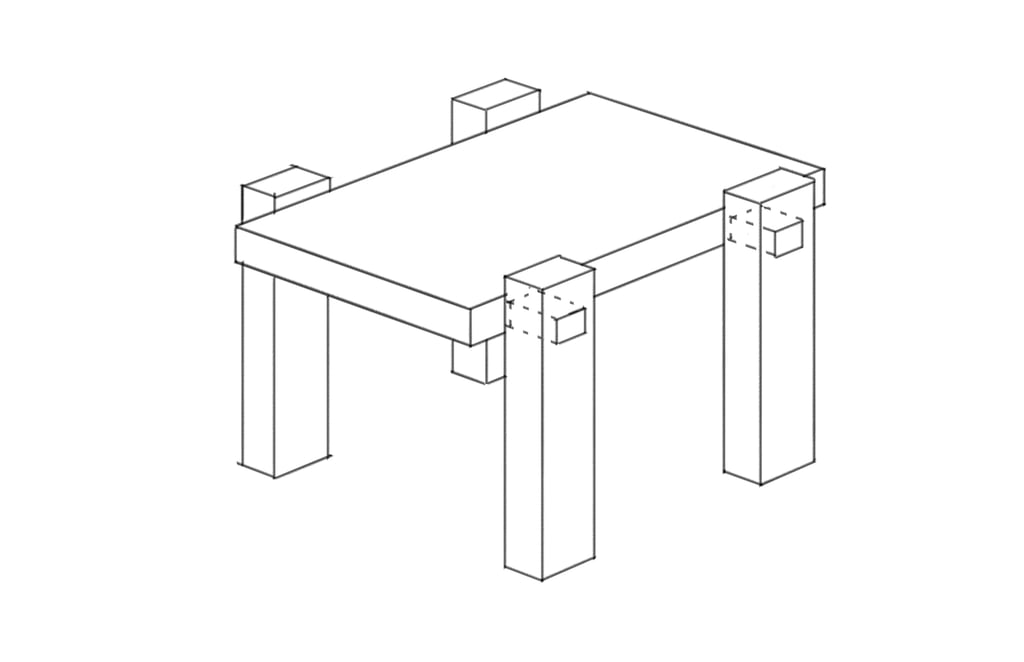
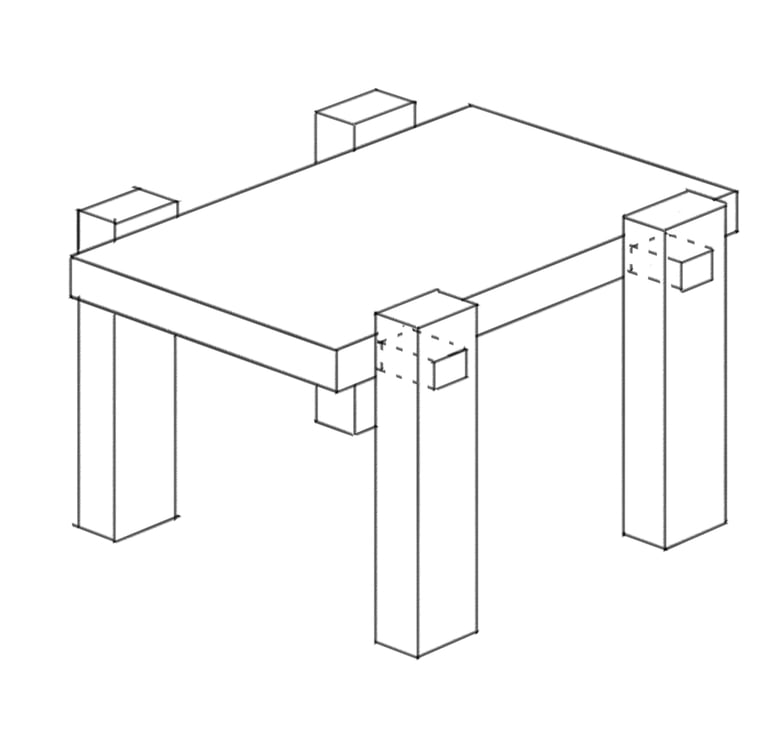
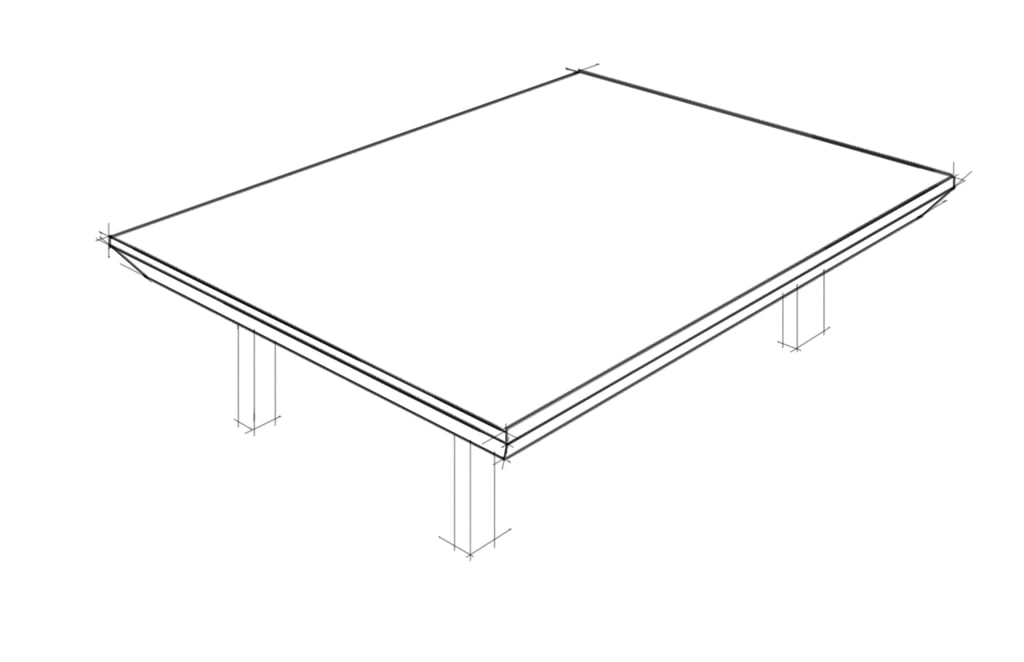
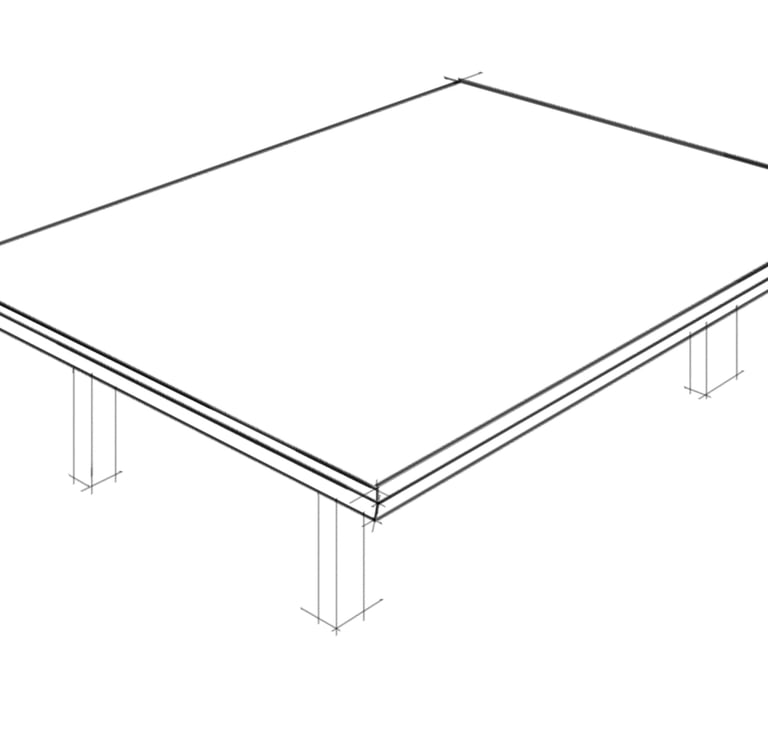
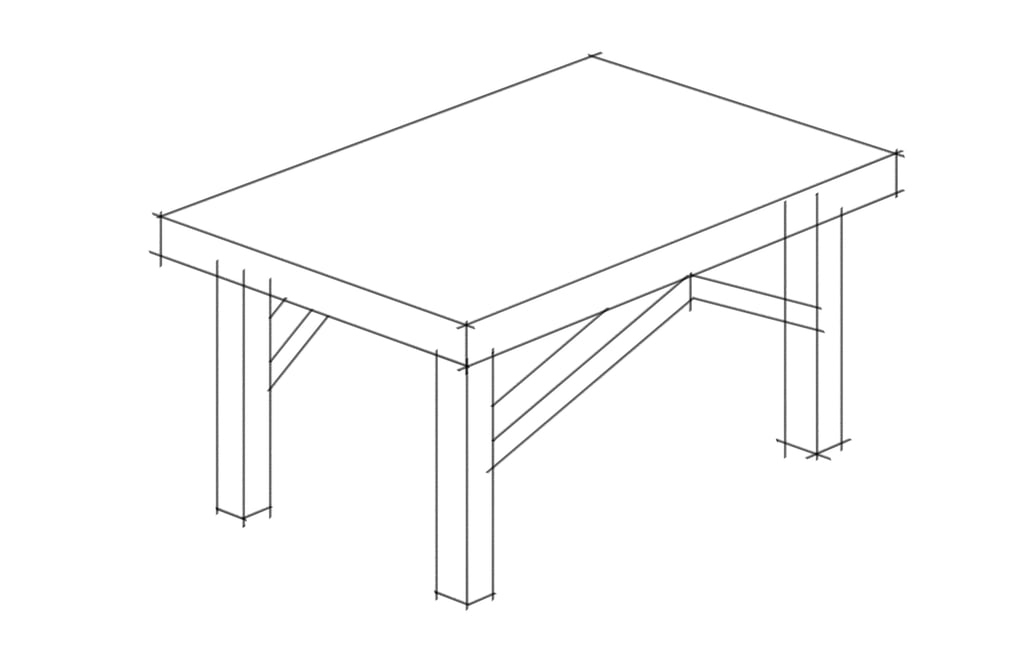
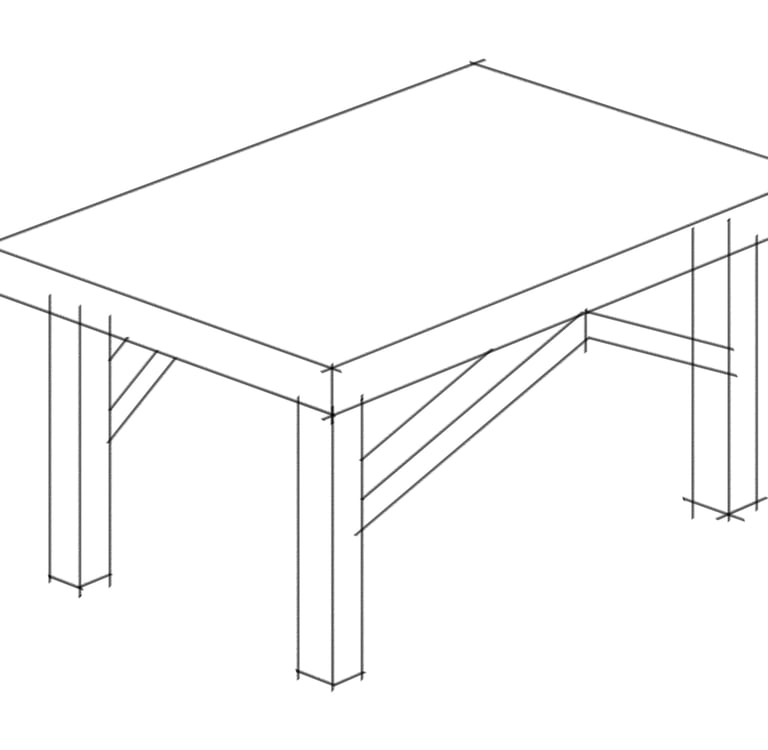
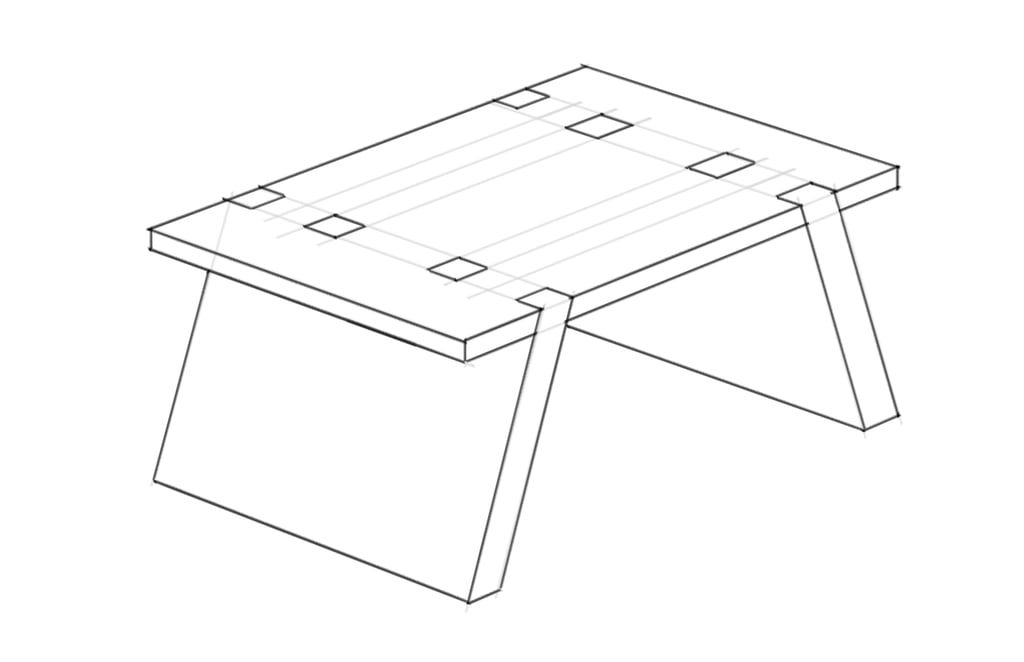
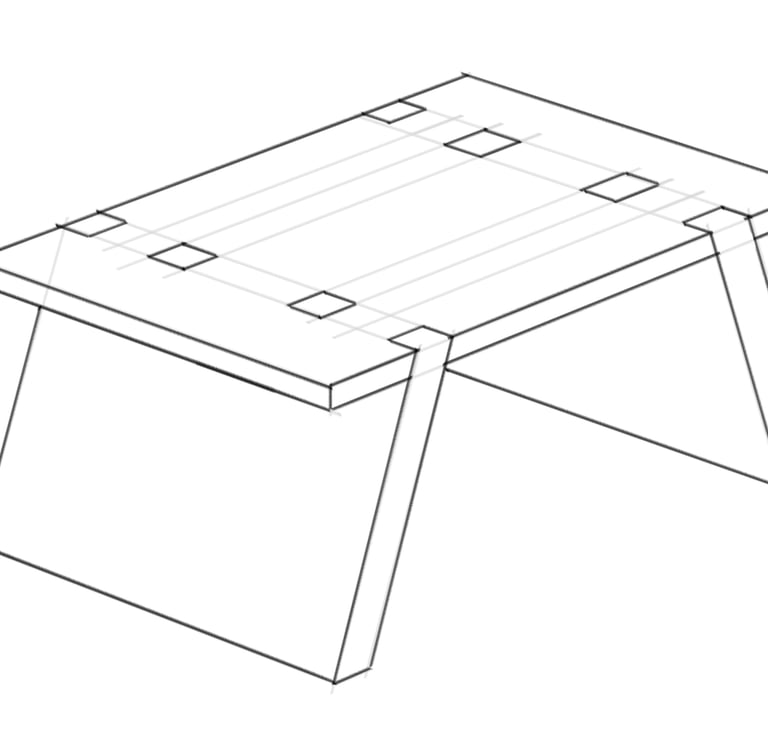
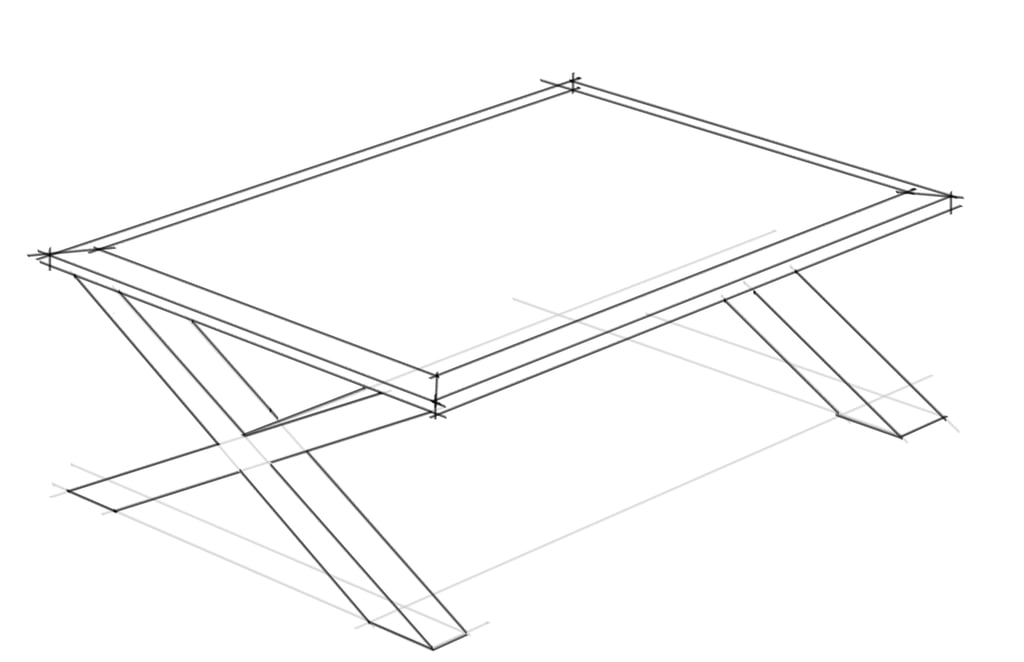
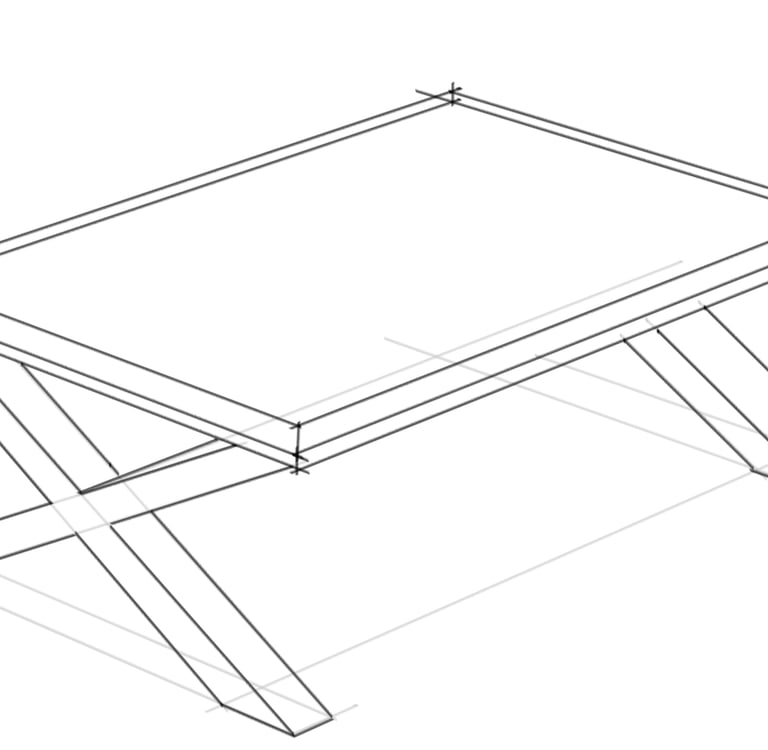
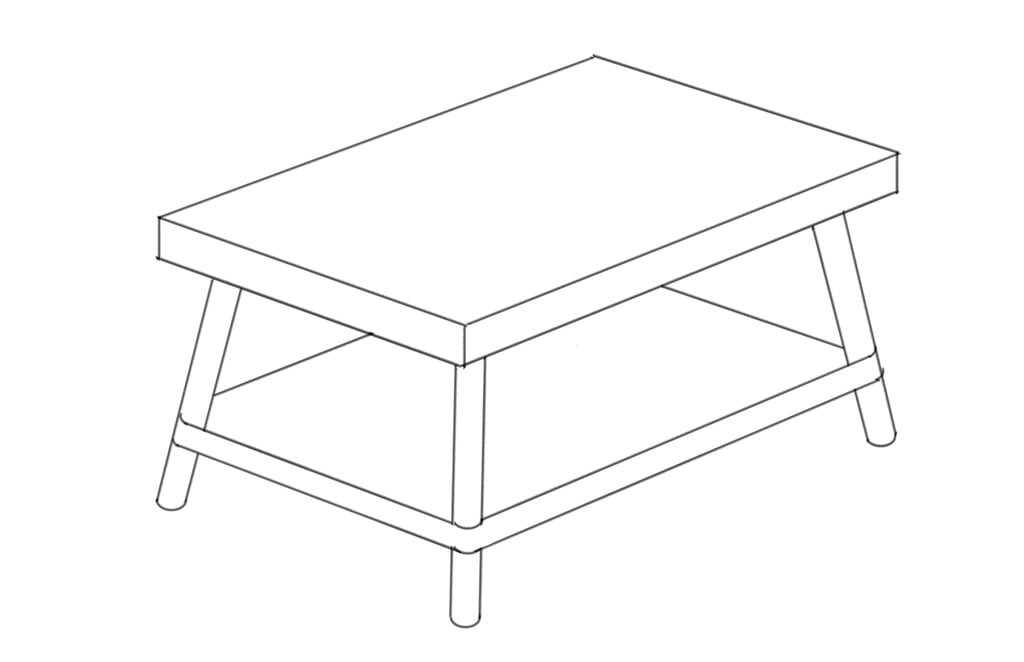
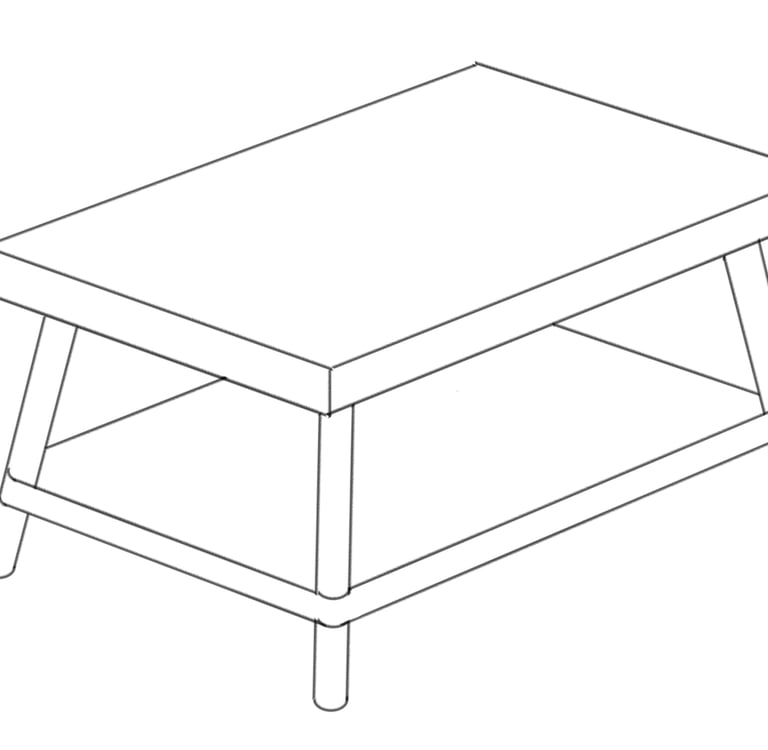
After a multitude of rounds drawing up potential leg shapes for the table, it was time to move onto higher fidelity sketches. These sketches would take some of the 2D art and place them into a 3D environment. It was through these sketches that I would finally settle on a design that would use bent lamination for the table's legs.
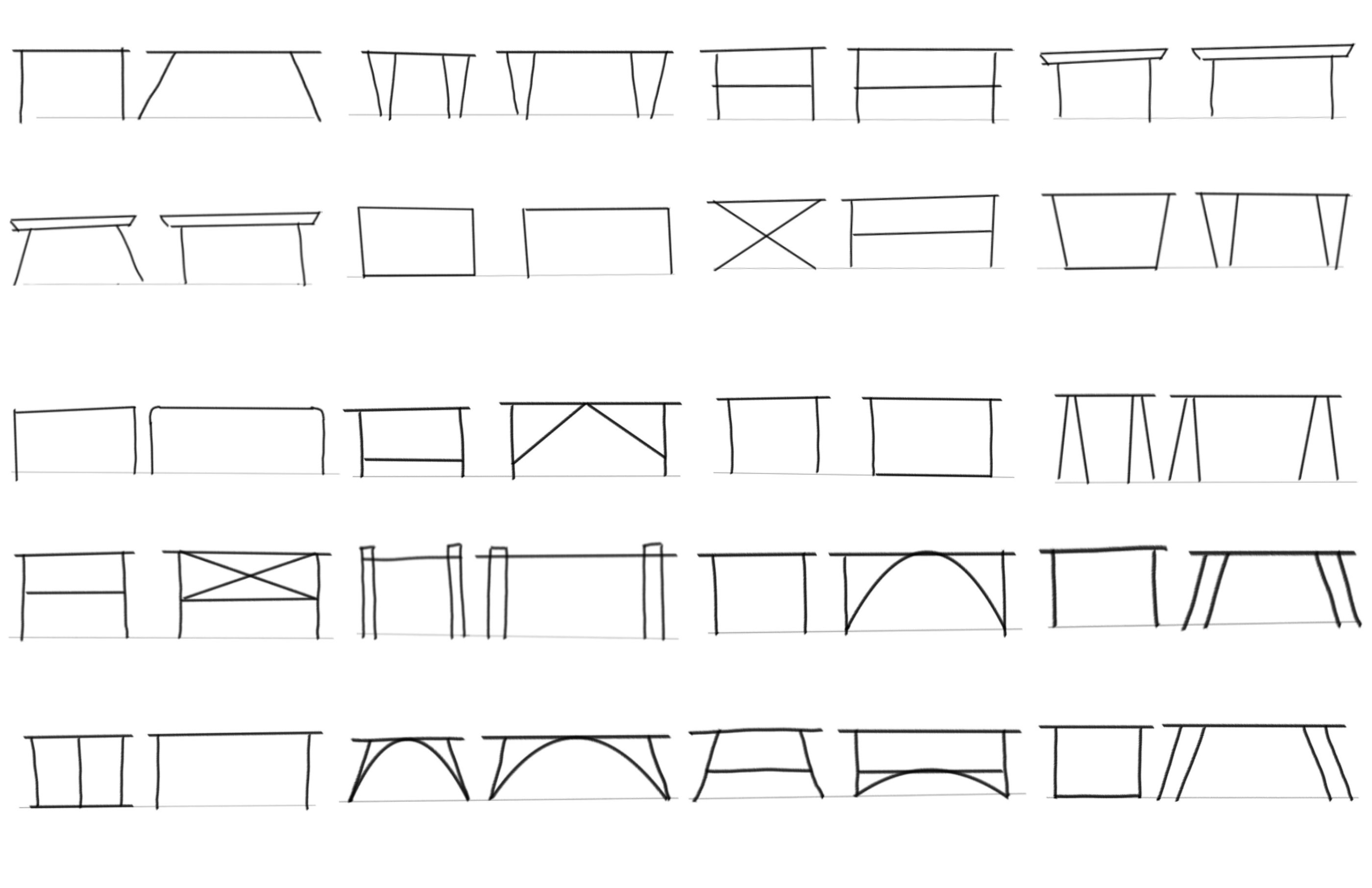
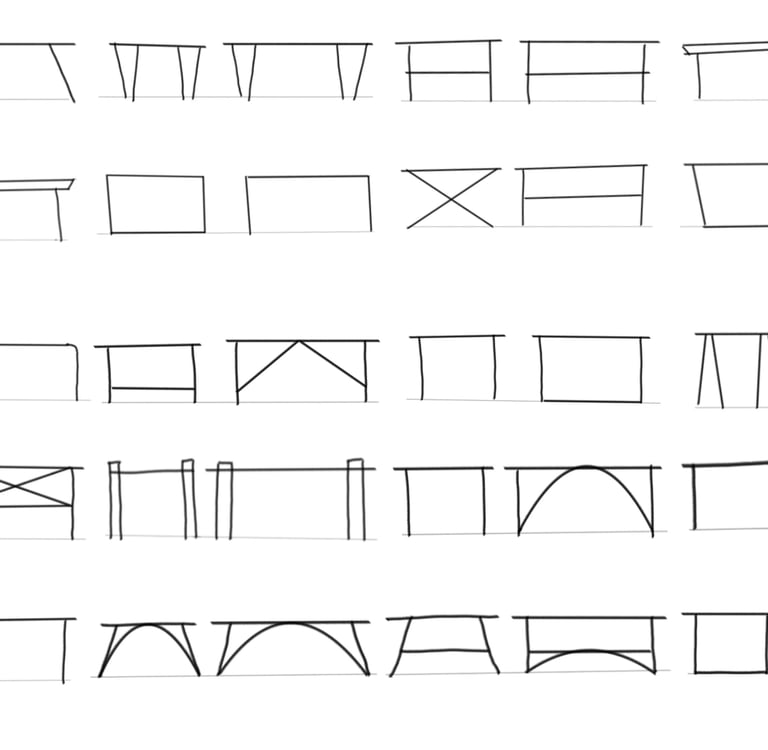
To begin the ideation process when confronting table design, it's best to approach the low fidelity sketches with very minimal line art. In order to output as many potential directions as possible, it was best to start out by simply drawing 2D views of the leg structures for the table. Otherwise, there would be too much time drawing a giant rectangle surface for the top of the table.


Ben Hines